Five Pirates Thoughts at Five

1-24-22 – By Gary Morgan – @garymo2007 on Twitter

The Player’s Union and MLB are meeting today and there is reportedly going to be a players counter proposal coming to the table. Again, this isn’t going to end this evening with two fake happy looking guys pretending they agree on everything. Just another step.

Once news breaks on this front, and I’ve had a chance to digest it, I’ll do another break down of how things are progressing, but I’m more than confident I won’t be covering an agreement, not yet.

Now, onto today’s thoughts.

1. Who Are You Rooting For?

I’ve been watching Steelers fans argue all morning about who they should be rooting for now that the NFL is down to their final 4. Some say Cincinnati because they’re tired of the Chiefs. Some say Kansas City because they can’t ever root for a division rival. The Rams are a popular choice, with Aaron Donald being a Pitt alum and all around good guy, Stafford is a nice story. San Fran came out of nowhere really.

You know what you don’t ever hear though? You never hear I can’t root for the Rams because I can’t stomach a big market winning again. In fact, when you watch the NFL, it rarely even crosses your mind.

I can’t imagine what could possibly be different in that league to have every team seen through their achievement and actions on the field rather than their ability to spend.

14 teams in the playoffs would equal what the NFL does, unfortunately MLB continuously fails to grasp the real success nugget they should emulate.

2. If Youth Wins, Let it Win

The perception is that the Pirates have a bunch of guys who will help by mid season right there in AAA heading into 2022, and that’s absolutely true. I’m here to say if that youth were to look ready, even as early as Spring training (whenever it winds up happening) let it take over. If Roansy looks better than 3 of the starting 5 come May, so be it. If Cruz is killing everything in the third week of April, move whomever you feel is blocking him out of the way.

Even if MLB somehow comes out of this negotiation still having the Super 2 BS in place, ignore it.

This club has worked hard to bring in talent, let us see it put to work. If you aren’t going to go get a real outfielder via free agency, don’t make us watch half a season of guys with no future here try.

3. The Pirates Better Be Right About the Catching

The Pirates traded Jacob Stallings and replaced him with Roberto Perez on a one year deal. For the sake of argument I’ll pretend Perez will be 100% healthy this entire season and the backup won’t matter much.

As we head into 2023, the bet has to pay off. What bet? Well, they had control of Jacob Stallings for a while, easily long enough to have someone develop from the group this club has coming. The bet is, someone is going to be ready to carry the load by 2023.

Who’s that going to be? Abrahan Gutierrez? Carter Bins? Henry Davis at some point? Point is, it has to be someone, and the fact I can’t put my finger on anyone from this list and plop them as a backup this year scares the hell out of me.

I really believe this team will have a decent roster in place for 2023, but this position is a big focal point as we get closer. I love the depth of talent, I don’t love that most of it isn’t closer. I don’t like the loss of Stallings more for this reason than the return or that they lost a solid player. To me this was very much so a timing issue, I didn’t like it then, and until they prove me wrong I won’t like it later. Even if who they got in return sets the world on fire.

4. Sustained Success?

It’s too early to talk about keeping a good team on the field, especially when they haven’t put one on in the first place yet. That said, the talent sets up already to add infusions year over year and while that guarantees nothing, it does give them capital. They can use this talent to acquire more, or they can keep rolling along a lot like the Rays do. I’m not so sure we should be anticipating a 3 year window per se, as much as a longform arc.

A championship is hard to develop, it’s even harder if you’re aiming for never bottoming out again as it can cause you to constantly look for what’s coming and neglect augmenting what’s here when the time is right.

These are things we just won’t know until we watch them handle it. Let’s say everything lines up and this team is in the hunt in 2024. Bubba Chandler is killing it as a hitter and pitcher for the Curve, and the big club needs a starter. Will they be willing to move Bubba for that piece? Or will they be willing to just make it and hope. Will they be all about it in 2024 or will they be more concerned about 2027 even as they have opportunity right there in front of them?

There are a ton of factors and ways to play this whole thing. None of them happen without building the talent in the first place. Job number one has gone well, I’m super interested to see how they handle the next part.

5. Tragic Kingdom

No Doubt, the Tampa Bay Rays have developed and implemented a strategy that has created a consistent competitor. As long as you don’t look at the place they play, there’s nothing about this franchise you could call a failure.

That said, they are primed for relocation and MLB just finally decided they’d nix their plan to split time between Montreal and Tampa. They want a new place to play, and to be blunt they’d struggle for attendance even if they had PNC Park. Put it in that location and they simply aren’t going to draw. I fully believe this team will move when their lease expires in 2027.

Don’t get me wrong, I honestly hope baseball fixes the system, but if they don’t I almost can’t wait to see if Tampa sticks with the system they use if and when they move to a city that actually shows up.

As many of you know, it’s my contention that Pittsburgh wouldn’t be satisfied with the Rays system because it still doesn’t afford keeping stars around, well, I’m not just pointing my finger at Yinzers. Most cities wouldn’t deal with what the Rays do very well, and I’m interested to see how they adapt, or for that matter if they do?

Top contenders for relocation seem to be Montreal, Nashville and Vegas, which is interesting, because Montreal didn’t exactly support the Expos well, and still don’t have a good place to play. Nashville has arguably the best minor league baseball setting in the game with the Sounds and would have to go outside the city limits to build a new place. Vegas is just a matter of time, since sports embraced betting, it was just a matter of time before Vegas gobbled up franchises in every sport.

MLB isn’t in position to expand, so relocation is the only path, and the Rays are really the only ones up for that move.

No, not the Pirates I say to get ahead of the morons sure to fill the comments.

The Unfortunate Evolution Of MLB’s Hall Of Fame

1-24-22 By Craig W. Toth (aka @BucsBasement on Twitter)

As a lifelong baseball fan, the streets of Cooperstown, New York are by far the most hallowed grounds that anyone could ever envision stepping foot on. Since the initial induction ceremony on June 12, 1939, countless legends have walked the exact same path as every single visitor to the tiny Northeastern town-in the middle of nowhere-with a population of less than two thousand people.

Throughout its history, baseball has been the perfect mix of history, nostalgia and a pure love of the game that so many of us have put on the cleats to play, or at the very least experienced it in the stands. From backyard Wiffle-ball, home-run derbies on a make shift field and Little League contests under the lights to high school rivalries, battles in college and for a select few, the chance for World Series Championship.

At every level of competition-including the view from a general fan’s prospective-there is so much emotion that goes into something that is honestly a child’s game; even if you are not supposed to call it that because of the current situation going on with MLB’s lockout of their players. Which, if you are asking me, only becomes a sticking point, or a faux pa, when there is a conflict between the powers that be.

Nevertheless, anyway you look at the current set of circumstances, it doesn’t really matter; because no matter what, the same feelings still exist. For some, baseball is life. And, beyond an innate desire to hoist the Commissioner’s Trophy at the end of the season, it would seem that each player has aspirations to put their name next to all of the greats that came before them.

Since it’s inception, and based on the original precedence set by a class of Babe Ruth, Ty Cobb, Walter Johnson, Christy Mathewson and Honus Wagner, the MLB Hall of Fame was designed to be a collection of the absolute best players in the game’s history. A Hall of Greatness, not a Hall of Very Good. Although, it appears that this very specific intention may have been lost in translation, or at the very least been watered down a little bit over time.

Part of this has to do with the process itself. And, no I am not just talking about the often criticized morality clause; even though it has effectively drawn the conversation from being purely stats based to one that involves speculation, investigations, formal reports and Congressional Hearings. It also draws the attention to a select group of players, rather than allowing the discussion to include everyone who is eligible; especially those who have a legitimate shot at being elected.

This year it’s mostly involved the final year of Barry Bonds, Roger Clemens and Curt Shilling, along with the first opportunities for David Ortiz and Alex Rodriguez; which is a rabbit hole I have found myself falling into more than once. Truthfully, I can’t tell you the number of times I have compared Ortiz’s time with the Twins versus his 14 years with the Red Sox, as it pretty much directly lines up with the alleged positive test for God knows what, that we are supposed to ignore because Ron Manfred told us to. He’s a man that can’t even be trusted to put a similar ball in every game or to negotiate a shortened season in good faith, without eventually putting MLB and its owners on blast, but we are supposed to have faith that he is being sincere with this explanation.

It’s unfortunate. I just want to open each player’s Baseball Reference page, like I did with Scott Rolen, Jeff Kent and Jimmy Rollins. However, all of the other available information is simply unavoidable.

Then there’s the maddening guideline about only being able to select ten players on the ballot or the structure that supports a player garnering more support each year until they eventually reach the 75% necessary to be inducted; and, don’t even get me started about the four Era Committees.

It’s rather straightforward, or it at least it should be. Have the writers vote yes or no on each and every player on the ballot. You’re either a Hall of Famer or you’re not. Instead it becomes this long drawn out process where it takes Larry Walker-and his 72.7 WAR, 2160 hits, 383 homers and .313 lifetime batting average-until the final year on the ballot to finally make it in; while almost completely ignoring the fact that he could still get in with approval from the previously mentioned tiny groups years later. But, that’s assuming they can make the right decision; an ability I have yet to see them exhibit on a consistent basis.

Back in 2019 the Today’s Game Era Committee chose to elect 22 year veteran of the league, Harold Baines to Hall of Fame. In his career, Baines earned 38.7 WAR, failed to reach any of the milestones- 3,000 hits or 500 homers, and his career .820 OPS-that voters often use as a measuring stick for enshrinement and only accumulated 6.1% of vote on the writers’ ballot at his highest point. So, if we are supposed to trust the process, Baines never even came close.

Next you have the case of “The Wampum Walloper”, Dick Allen. In his 15 year career, Allen earned 58.7 WAR, put up a .912 OPS, was selected as Rookie of the Year in 1964 and won the MVP award in 1972. Yet, Baines was considered to be a Hall of Famer, while Allen fell short again this year. To make matters worse in my eyes Gil Hodges-who’s overall numbers don’t stack up against Allen’s-was selected over Allen just last month. This is not to say Hodges isn’t a worthy candidate; but if he is, so is Allen.

The Hall of Fame has set all of these somewhat arbitrary standards to demonstrate that a player is deserving of a spot, then decide to totally disregard them randomly for certain players. It’s completely exhausting to see all of the hoops one has to jump through to explain some of these decisions.

The whole thing has become a spectacle.

Listening to voter’s justify the reasoning behind their ballots, talking about PEDs at nauseam, hearing a candidate call a writer an “a-hole” for not voting for him, reading about a player demanding that his name be removed from the ballot in a Facebook tirade and bashing voter’s for submitting blank ballots just to name a few.

The Hall of Fame election process has become more about how a player is selected, rather than concentrating on their accomplishments.

This can’t be what Stephen C. Clark intended his grand idea to become. And, although there is no way to make up for the mistakes of the past, it is possible to ensure these problems don’t persist. Unless, they really aren’t invested in the perception of and future for the Hall of Fame.

Robo Umps Advance to AAA in 2022

1-23-22 – By Gary Morgan – @garymo2007 on Twitter

We’ve known MLB was looking to experiment with automated strike zones in the minors, and the experiment started in earnest last season in selective Single A locations. On Thursday, news broke that this experiment would be moving to select AAA locations for the 2022 season.

It’s not a surprise that MLB is advancing this, but it is at least a little surprising to see it advance so quickly, especially since it wasn’t a completely clean experience for players and more importantly, it wasn’t as accurate as you’d like to believe it would be.

If you asked me about my feelings toward robo umps coming to the game a few years ago, without much thought I think I’d have just said yes, please. Give me time to think about it a bit and the unintended consequences start entering my mind.

I think about how unimportant catching would become. In fact, as silly as it sounds, I could argue unless the league accompanies this with specific rules to combat it, we could see teams feel there is no reason to have a catcher with nobody on base and less than two strikes. Do I see a bunch of teams doing it? No, but ten years ago I never thought I’d see a team put 5 outfielders in a game, so why would I think it’s insane to see someone use the catcher as an extra first baseman?

Pitch framing has become a prominent skill set for catchers to possess, and at the same time, it directly leads to “fooling” umpires into calling balls as strikes. Essentially we’re going to lose a skill set every baseball executive hunted and taught, yet the skill set itself made the change necessary to consider.

This all started back in 1997, that’s when the strike zone started showing up in mass on baseball broadcasts. This isn’t to say fans were too stupid to recognize that Greg Maddux was getting calls 3 inches off the plate, but now it was right in front of you for every pitch.

I like to equate this to a simple drive to work. Most of you drive to work and follow the rules, but if you had a computer or video review of your trip every day, can you say you come to a complete stop at every stop sign? Can you say you never exceed the speed limit? Never cut anyone off trying to merge on Crosstown Boulevard? Of course we were going to see bad calls right?

Umpires have now been exposed by the universal implementation of PitchfX systems in every ballpark. These systems track every pitch from release point to catcher’s glove and measure the velocity, break and location the entire way. Umpire inaccuracy has been as high as 15% miss rate over the past decade, and a game that has allowed video review of guys coming off second base for a fraction of a second by a fraction of an inch in the name of getting it right isn’t exactly in the position to let a number that high go unchecked.

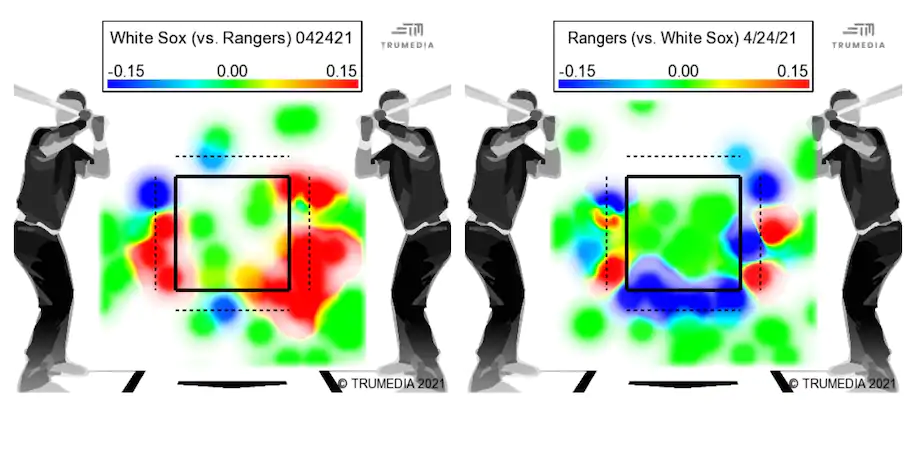
Perhaps if they were to remove the worst of the worst baseball could have avoided this, but it’s hard to say there’s anything technology wouldn’t blow out of the water here. Last season in one game between the White Sox and Rangers, Umpire Chris Segal had a clear and visible different strike zone all game long for each team.

Image Courtesy of the Washington Post

There was no punishment, no suspension. Nothing more than a gee shucks them’s the breaks fellas.

No wonder we are barreling toward taking yet another human element out of the game. I mean even as I consider how much I don’t ultimately want to see this come to the game, how can I argue that things like that simply can’t happen? I mean this was a game in April, out of 162 baseball games each of these teams would play, but if it could happen then, it could happen in a one game Wild Card just as easily.

Maybe we should ask some players? I mean, MLB isn’t, but they still have opinions right?

I get both points here. Bligh is right, AAA is supposed to be a step before MLB, so train hitters to develop their eye for a perfect strike zone, then expect them to understand at the next level that pitch on the outside corner is too close to take.

Travis is right too, batters love having that discussion with an umpire. They like to know exactly how far that zone is going and adjust. I suspect asking them how much further the computer is going to go isn’t going to net much response.

I agree with both, players should be at least asked about the change. In fact since AAA will have some members of every team’s 40-man, therefore union members, I’m not sure how MLB can implement it without taking that step.

I don’t think this will slow down the game. I don’t think it’s going to destroy anything for fans either. Over time I suspect none of us would even think about it. There will still be an ump at least loosely standing back there. They still have check swings, foul tips, out calls, catcher interference and the like to call. It’s not like this is going to cost jobs, but man it sure will take away the importance of seniority I’d reckon.

Good hitters will get better at recognizing the zone, good pitchers will find ways to bend the ball into the very corner of the cube. Finely tuned skills will evolve into new ones, but baseball will move on.

Better isn’t good enough here though. If it isn’t perfect there is no reason to implement it in MLB, and right now, it simply isn’t perfect. First of all, the zone is established based on team provided heights of players, which themselves are as inaccurate as your driver’s license that hasn’t changed that figure likely since you were 16 years old. Additionally during the 2021 season the zone itself was changed wider, taller, then back again multiple times.

The best way to see this might very well be, why did we think this was ready to advance to a more prominent level of baseball?

Check out this image from TheRinger.com

Ouch.

To me, MLB has to prove this system is infallible before it becomes the law of the land, or it’s no better than the perfectly imperfect system they currently employ.

So, do I not want MLB to “get it right”? Of course I do, but until MLB can prove this system will, I’ll pass.

Keep your eyes peeled on this story as it develops in 2022, because baseball clearly wants to see this come to a ball park near you real quick. And that’s the point.

Through The Prospect Porthole: Tsung-Che Cheng Is Looking To Climb The Ranks

1-22-22 By Craig W. Toth (aka @BucsBasement on Twitter)

When reading about the meeting General Manager Ben Cherington-and one of his Assistants, Steve Sanders-had with the local sports media on Wednesday concerning the start of the International Signing Period, it seems that the focal point of some columns was a singular word-diverse-uttered by Sanders as he described this year’s current class.

“We feel pretty confident that this group of 19 players we brought in this past weekend represents a really diverse group in a lot of ways. Diverse in being from all over the globe, I think spanning six countries. Diverse in a pretty impactful mix of position players and pitchers. Different skill sets. Different ages. Guys at different parts of their developmental progression. I think we feel really good about that.”

I can’t disagree with the sentiment of Sanders’ statement one bit. It is an extremely diverse group of young men. However, I also don’t want anyone to get the wrong idea; like this is something brand new for the Pirates Organization.

During a previous blog post, one in which I compared the differences between Cherington and former GM Neil Huntington’s approaches to the International Signing Period, a brief overview was given concerning some of the young men Pittsburgh had signed to open the 2019 International Class; focusing mostly on the bonuses assigned to each player, in an attempt to demonstrate Huntington’s departure from his usual methods. Yet, during this succinct description I failed to mention each and every country encapsulated by these acquisitions.

After just the first day the total was seven, with an eighth to be added to the list a few days later when the Pirates signed 17 year-old Taiwanese shortstop Tsung-Che Cheng for $380,000, with $60,000 for educational expenses. At the time Pittsburgh wasn’t the only team interested in Cheng, but he felt they took the most initiative and gave him the best opportunity to develop as a player.

Eventually the number would reach ten before Cherington took over the the process. Still, my mind would keep coming back to the addition of Cheng as one that peaked my interest due to the similarities in tools between him and another international signee Ji-Hwan Bae; who at the time had already experienced some immediate success in Pittsburgh’s Farm System.

Unfortunately, it would be an extra year of waiting before we could actually see if the comps matched up on field, and not solely on the scouting sheets. Although, when Minor League Baseball finally returned, it’s fair to say Cheng didn’t disappoint in his delayed debut.

After missing a couple of weeks to start the FCL Season-thanks to a pitch to the face in camp-Cheng hit the ground running with a homer in his first professional game; showing more pop than had been expected from a player with his frame-5’7” and 154 pounds. However, it was his overall approach at the plate that was most impressive as he put up a 19.1% walk rate, while only striking out 8.9% of the time. Of course having a .312/.449/.492 with a 154 wRC+ and four homers on the season doesn’t really hurt either.

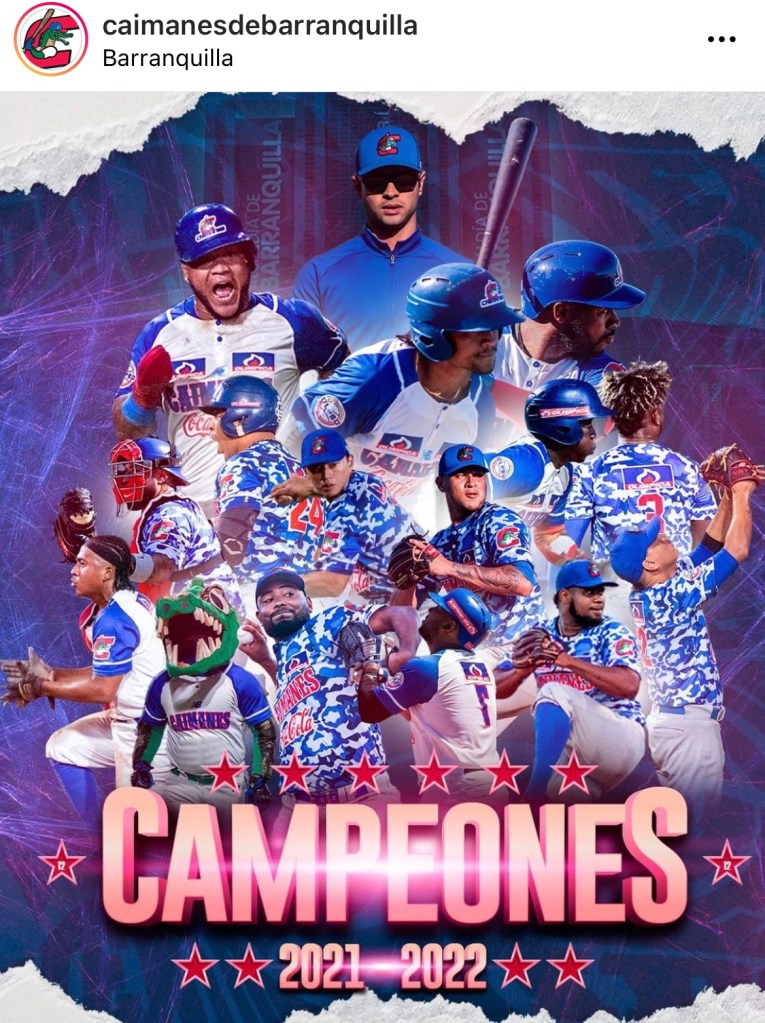
After the somewhat short 38 game start to his professional career, Cheng went to play for Caimanes de Barranquilla in Liga Colombiana de Béisbol Profesional (aka the Columbia Professional Baseball League) where he has performed very well; finishing the regular season with a .296 AVG and a league leading 4 triples. His solid play continued into the playoffs, where his team recently earned a championship along with a spot in the upcoming Caribbean Series.

Now obviously none of this guarantees success for Cheng in the future; but believe me, many people-including myself-are starting to take notice. During a recent conversation with Greg Rosenthal from Prospects1500 for the Bucs In The Basement Podcast, I asked him to talk about about a player he could see flying up the rankings board over the next year. Without hesitation, Cheng was the name he gave.

He’s got the tools, he can move all over the infield seamlessly and he’s added some surprising power.

Once again my anticipation is high to be able see Cheng take the field in Bradenton, Greensboro or both this upcoming season. Luckily this time I won’t have to wait almost exactly two years for it to happen.

Ten Months and Six Days – The Story of How One League Saved Itself

1-19-21 – By Gary Morgan – @garymo2007 on Twitter

In 2004 the NHL had reached a precipice.

A powerful union opposed “cost certainty” Gary Bettman and the NHL Owners wanted and felt they needed to keep the league from continuing to fall behind other professional leagues, a salary cap system.

Sound familiar?

I hear so many of you tell me that MLB will never have a salary cap because the MLBPA is “the most powerful union” in the country. You’re right, there is just about no scenario that brings about a salary cap without great pain and loss. Implementing one has been compared to chemotherapy for sports leagues. In order to save the body you almost have to kill part of it.

It can be done. It has been done, and today we’re going to look a one example of how it came to be, why it reached this point and what it took to finally make it happen.

To talk about this properly we really need to travel even further back in time. See, ten years earlier in 1994 the NHL was playing a season with no collective bargaining agreement. Player salaries were exploding for superstars, and superstars were conglomerating in major media markets like Los Angeles and New York.

Owners wanted a salary cap, the players didn’t. Believe it or not, the NHL tried implementing an MLB style luxury tax that the players saw as a salary cap and dismissed it out of hand. To add to the contentiousness, this came only a few years after the players went on strike in 1992 winning concessions that started the inevitable ball rolling toward the league becoming the lopsided mess it would become. With no mechanism in place to support smaller market teams, some filed bankruptcy. Hell, some we should be very familiar with simply didn’t pay players which ultimately led to Mario Lemieux owning the Penguins franchise.

In 1993 Gary Bettman took over as Commissioner of the National Hockey League and he immediately set forth educating owners about how much more money they could make if they’d only come together and support a salary cap.

So when the lockout of the 1994-95 season came about the coalition he built was weak, and new. Following a man who didn’t have the undying trust of every owner, especially the big spending, and financially solvent large media market clubs. After the lockout dragged on the big markets fractured. Toronto, Detroit, New York, Dallas and Philly all broke with the league.

Union leader Bob Goodenow had won this round. He’d gotten in the ear of enough of those owners with talk of increasing revenue sharing that eventually he broke them down and settled for minimal changes.

After locking out players for half a season and coming away with nothing, it’s almost understandable that it would be nearly ten years before the issue would find it’s way to the surface again.

So back to 2004-05 we go. Believe it or not, the same figureheads would square off again. Bettman and Goodenow, both armed with the mistakes and victories of the past. This time though, Bettman learned some new tricks, and Goodenow underestimated how many franchises were in legitimate trouble.

This time Bettman had a coalition that included almost everyone. Ten more years of data to show how the NBA and NFL were flourishing. Ten more years of relationships, and more than anything a memory of getting burned by big markets splintering from the group.

His action? He implemented a 1 million dollar fine for any owner who spoke out against the effort. It wasn’t a toothless fine either, when the LA Kings spoke out against the long and painful lockout and suggested it perhaps wasn’t worth the fight (again wonder why) he slapped them with the fine.

It showed two things, the league would stay unified on the issue this time, and it also showed Goodenow he wasn’t going to create cracks in the group.

According to the US Securities Exchange Commission before this lockout NHL clubs were spending roughly 75% of their gross revenue on salaries for players. The league lost approximately 273 million dollars in the 2002-03 season.

They tried proposing light cap systems, faux caps, individual player caps, capped exceptions, even centralized salary tied directly to league revenue.

The Union vowed to never accept a salary cap under any circumstances. Thing is, the evidence was all there. Proof of dying small market clubs was everywhere you looked. Bankruptcies of several franchises, complete gutting of rosters, in fact some teams like the Penguins and Canadian teams not in Toronto were actively hoping for a lockout as they stood to make more money if there was no season than if they played.

Before this lockout would end the players would propose a salary cap themselves in an effort to play again. In fact former stars Wayne Gretzky and Mario Lemieux were rumored to have taken it upon themselves to negotiate with the owners to avoid losing the entire season. Both denied the report from the Hockey News.

Finally after Ten Months and Six days the players association with 87% of the vote ratified an agreement with a salary cap firmly in place. It would be adjusted every year and be tied to revenue with players receiving 54% of the dollars brought in. Players were granted guaranteed contracts, a salary floor was instituted and revenue sharing split money from the top 10 grossing teams to distribute to the bottom 15.

Since the season was lost and there were no results to base the draft on, the NHL used a lottery. So thanks for Sidney Crosby by the way.

All of the arguments you’ve every heard for why this can’t happen in MLB have happened in other leagues. Oh sure, the dollar figures are bigger, the gap between the haves and have nots is wider too. No baseball team is in danger of filing for bankruptcy, because MLB already tried to fix that by introducing revenue sharing.

Make no mistake, the NHL didn’t start out with the plan they wound up with. They offered six different plans that the union pushed away for simply sounding like a cap system before they finally realized there was no path forward that accomplished much more than making things a little better and setting up for another very similar fight 5 or 10 years later. Eventually the answer was in front of them, and the price was worth getting it done.

MLB isn’t special folks. It might be your favorite sport, I mean you’re reading a Pirates website on January 19th during a lockout with a terrible team, but baseball eventually has to address many of the same problems every other league has.

When you see the league propose a salary floor and a lower tax threshold with increased revenue sharing, make no mistake, that’s a salary cap system. A weak one. One that wouldn’t completely fix the game, but a cap nonetheless. When you see them slightly adjust salaries down over a decade as we’ve just watched, it’s not an accident.

The Pittsburgh Penguins filed for bankruptcy twice and after the cap was instituted the franchise value increased by over 161%.

This was painful. The league lost stars to other leagues in Europe, some never returned, but the league is stronger than ever. A league that used to be primarily supported by attendance now has a national audience, strong national tv deal and recently expanded twice. All things MLB wants, all things MLB wants in every market.

As you see from this tale, it’s not always about New York or LA agreeing. In fact it rarely is about that, it’s about the health of the league eventually winning out. It’s about every team having the same opportunity.

In fact, MLB commissioned a study not unlike the NHL to talk about just how much money the league lost during COVID, so it’s not without precedent that they’re willing to have an independent body dig into their finances. None of this can happen without that step.

Now, if I’m honest, I think we’re a whole lot closer in MLB to 1994 than 2004, but the rhetoric is starting to make its way into the conversation. Late last year Hal Steinbrenner the Yankees owner said he supported and voted for Major League Baseball’s proposal to lower the luxury tax threshold to 180 million and a 100 million dollar floor. Here’s his direct quote from the AP “There’s seven of us on labor policy,”

“Boston, me, several mid-markets, a couple small markets. We’re a very diverse group, and when we came up with the proposal, including CBT and luxury tax that we brought to the union, it was a unanimous, on our committee, a unanimous deal.”

“And every owner on the committee, there are certainly things in the proposal that we didn’t like, I mean every owner. But we wanted to put together a proposal that address their concerns and come together as a group.”

Does that sound like these teams are miles apart? Does that sound like a league that is never going to recognize the better all teams do the better individual teams do?

I’m not sitting here telling you this is currently on the table, but every time the players cavalierly bat away a proposal without a counter, or move a percentage or two from where they were, they usher in and draw more teams into a coalition that will one day be their undoing.

It’s not about hurting players, it’s about saving a league. Players will do quite well no matter which direction they go, but much like the owners, the richest among them will be a little less so, while the lowest earners will finally get their share of the pie.

Baseball on the field is beautiful. Baseball behind the scenes is ugly, but it’s no different than all the other leagues, with the exception that they are the lone holdout that hasn’t realized the players and owners should be partners, not enemies.

Oh sure they’ll fight about things even with a new system. But the millionaires and billionaires nonsense will have ended and the arguments will be more about ticky tack stuff that rarely if ever threatens the game we love.

When I tell you it’s all been done and said, I mean it. History is a beautiful teacher if only we use it to our advantage.

Five Pirates Thoughts at Five

1-17-21 – By Gary Morgan – @garymo2007 on Twitter

We are all snowed in here in Western PA, and the Steelers are officially done playing football, so is Ben Roethlisberger. The Penguins take center stage now with their own set of aging stars and here we are talking about a team still trying to develop enough to make some noise.

It’s also Dr. Martin Luther King Day, and look, I’m a middle aged white guy, I’m not going to pretend I have some kind of inspirational take on why the man was so important, but I hope everyone takes a few minutes today and just read or listen to some of his messages to the American people. I think you’ll find why his voice is so sorely missed today.

Now, onto baseball.

1. What Did You Expect?

The owners made a proposal and I wrote a little breakdown of what it included right here, but many of the comments from readers focused on what they really need, a cap. I get it, completely, and anyone who’s followed either Craig or I, our writing or our podcasts knows we entirely agree, but this proposal is still everything I expected.

It was a fishing expedition. The owners moved to a microscopic level toward the players on almost every issue, and the players will assuredly come back with minimal movement of their own from their original asks. This will provide nothing more than intel really. It’ll show what’s really important to them, and their willingness level to compromise.

Again, I get it, a cap system is the real fix for this league, but consider this an opportunity to really show how far apart they are. For instance, if the players come back from the owners Tax Threshold figure of 214 million and aggressive penalty for exceeding it with something much closer to their original ask of 248 and they seem firm on it, expect some owners to start feeling an agreement isn’t happening. If some owners start to feel that way, chatter of going nuclear will start to ramp up. Nuclear of course meaning full blown systemic change. If it appears the player are willing to, um, play ball, we’ll probably get an agreement that changes very little on a 3-5 year term. Essentially just a “let’s just get back to playing and we’ll figure it out” philosophy.

It’s so early, I choose to just let this play out before panicking about what is and isn’t included or when/if we’ll be playing ball. Next step is seeing what the players come back with.

2. Who Are the Pirates DH Candidates?

As I look at the roster, man, it’s slim pickin’s. My gut says Michael Chavis and Yoshi Tsutsugo could see time there, but I could also see Derek Shelton use it as a rest spot for just about anyone.

Another option is of course someone slated for AAA, like Oneil Cruz, Rodolfo Castro, Maybe even Jack Suwinski over time. Truth be told, I don’t see anyone who fits this perfectly.

I wasn’t upset to see the Pirates move on from Colin Moran, but he could have fit quite well into that position and they certainly had room to afford it. That said I can’t really claim they lost someone who would put up impressive numbers as a DH either.

Maybe it’s nothing more than a spot to keep open for the shear flexibility it provides in calling up prospects. Not ready to have Cruz take over at SS, ok, well let’s start letting him get at bats up here. Don’t think Castro has a natural spot in the field, well, maybe he fits in as a good option to fill this spot while he works on the fielding aspect of his game.

Interesting, and a problem many NL teams will face. You could see teams like the Phillies decide Realmuto is more valuable as a hitter than catcher. Maybe the Mets do the same with Alanso. Joey Votto is a fine defender but at his age maybe getting him off the field at least some of the time would do him well. I’m sure all of you have watched at least a little AL ball, but living that style is just different, and it raises questions and gives you flexibility to have two or even three guys who typically would battle each other for playing time keep themselves in the lineup and progress rather than be permanently blocked.

3. Last Chance Cafe

There are several Pirates players that simply have to be on their last shot. This is both a reflection of where they are in their careers, and the very real talent that is on it’s way. Some players have to be on their last go here and if it doesn’t click, one way or another the team should move on.

I have to list some guys here. Anthony Alford has exactly one more chance to prove he’s a major league talent. He’s already at the point where even if he finds a way to stick the landing, he’s already long in the tooth. At this point he’s going to either prove he’s someone they could move for someone else, or that he’s never going to beat the Quad A nameplate. Cole Tucker has to show he deserves a place on this team. The first round selection isn’t enough anymore, it’s been the better part of a decade now. the bat either shows up, or it doesn’t and the Pirates have too many options to continue praying he finds it. Kevin Newman has excelled with the glove, but the bat simply can’t remain a liability. He’s into arbitration already and trust me when I say the glove won’t be enough to reach Arb 2 in Pittsburgh.

Michael Chavis, and Hoy Park have both gotten to the age where they too must show something. Chavis was a top prospect and experienced some success in Boston, but he hasn’t recaptured the magic since. Park is a late bloomer and took off in AAA, but he needs to show something in MLB or risk losing his spot on this club.

2022 is the year of answers, and for some of these guys the answer is not going to keep them in black and gold.

4. Instagram Heroes

I love watching the videos from prospects. Working on their swings or pitching technique and posting things they consider progress is really nice to see, but that’s all it is, nice to see.

Every player thinks they’re getting better. Every player can throw 20 pitches and pick two that look better than what we’ve seen in the past. Each and every one of them can legitimately show they’re working hard.

I see a lot of folks really buy every one of these snippets hook, line and sinker, but always keep in mind, these aren’t coming from the team, they aren’t coming from scouts, they’re coming from the player. That doesn’t mean they’re being disingenuous, but it also doesn’t mean they’ve completely conquered a problem that’s been plaguing them.

Take for instance, Mitch Keller. He posted some very encouraging videos of pitches, and talked about changing some of his mechanics. The shape of his curveball looked great in his video, and the uptick in velocity will surely be welcome, but I still saw no movement in his fastball, and he could hit triple digits, with no movement or better control of the pitch, he’ll still get lit up like a downtown Christmas tree against MLB hitters.

Take these videos for what they are, nice. Never mistake this for being close to seeing things through the eyes of a scout.

5. Sooner Than What?

For the 3rd time, Ben Cherington has mentioned in an interview that the Pirates would be competitive “sooner than most think”. That’s not me paraphrasing, that’s a direct quote and I can’t help asking, what in the actual hell does that mean?

I mean, maybe he’s been reading my facebook comments and since 90% of them say NEVER, he can rightly say sooner equals 2029. If I had to guess though, he means within the next season or two.

Now if he means 2022, he better come out of the lockout with a fire in his belly to start signing players, and I think we all know that’s not going to happen. Even simply looking at the construction of the roster currently tells you that, if they planned on doing something along those lines they’d have 4 or 5 open spots on the 40 to fill yet.

If he means 2023, I suggest he best not slow walk some of the guys I see starting in Altoona this year because real impact isn’t something I’d bet on with rookies.

Maybe he looks at this rotation, or the mix of options he has for the rotation and thinks they have a chance to compete. I’ll be the first to say I honestly feel it’s better than it was last year, but it’d be a stretch for me to think anything I consider competitive is happening.

Hey, at the end of the day, it’s a relatively safe statement. Inevitably he’ll be proven right so long as he eventually gets the job done there will always be someone who thought it’d take longer, but I’d just as soon he keep his head down and show progress on the field as opposed to project it.

What Will Proposed Draft Changes Accomplish?

1-18-22 – By Gary Morgan – @garymo2007 on Twitter

It’s a story as old as the game itself.

Young players come up, the team struggles mightily to look like a professional club, and after some of those youngsters gain experience, they eventually do.

This used to be prompted by veteran players aging out more than anything. Forget the cheap owner for a second here, and honestly ask yourself if Willie Stargell would have been still playing anywhere in today’s game.

The game has changed, and it’s changed all across the league, not just the small markets. The Cubs had almost every major contributor to their World Series winning club reach the expiration of team control at the same time and they made moves to recoup talent. I mean, it’s not like you can reasonably assume they traded Kris Bryant because they didn’t like his game. You can’t say they can’t afford to keep him. So are they tanking as so many like to claim? Not in my eyes, I mean it seems to me more about knowing they couldn’t, even in their position as a big market ballclub, afford to keep that entire squad together, on top of some of them like Anthony Rizzo aging out and a system that has nowhere near enough pitching coming to believe it would work.

So yes, the Cubs sold off, and will primarily go young.

Now, we can’t be naïve here. When and if the Cubs get back to feeling they’ve developed enough, they’ll spend again, and likely spend big. That’s the difference really between those markets and mid to small.

Different teams handle this in different ways, but what’s unavoidable in this game is that when you win consistently, you tend to have a veteran squad, and just as consistently that costs money. It also costs you draft position, and unless you make shrewd moves to bring in top talent or hit homeruns in the international market, chances are at some point you’ll run into another unavoidable truth, your system simply lacks enough to keep the train on the tracks.

I’m sure tanking happens. Not on the field, players want to win, and certainly don’t want to harm their own careers trying to help a franchise suck. I guess I just see it as part of a cycle, and I further think the only reason the league and players union really see it as an issue today is because they’re seeing teams that traditionally spend like drunken sailors on shore leave such as Boston, Chicago, and Texas doing the same thing the traditionally frugal teams do. It’s already netted Boston and Chicago championships. We’ve seen it work in Houston, and now Texas looks to be ready to come back out of their downturn.

The teams at that end of things have a much shorter downturn than the lower markets. They can do it for a year or two then spend like crazy to immediately rise from the ashes, now with a backing of the infusion of young talent that will slowly augment what they bought. Teams like Pittsburgh and the like have to actually see that talent make it to the league before adding from outside and it makes downtime even longer.

In other words, when the Pirates who could and should live around 100 million dip below that figure, nobody really cares. Now when Boston, Chicago and Texas do it, well, let’s just say that scares the hell out of some folks.

So it’s a problem, and I’d add a problem that a salary cap would fix almost overnight. I don’t get the impression the owners want to have that fight right now, so instead they go to putting band aids on every spot of blood they spy.

Band aid number one is expanded playoffs. OK, so it’s a money grab too, but expanded playoffs is an effort to have fewer teams feel their chances of making the playoffs is a long shot, therefore they’d be less likely to sell off a the deadline in theory. I’d say a bunch of teams would be more likely to add, but I think they’ve missed the boat here a bit, there will also be fewer teams willing to call themselves sellers at the deadline too. It stands to reason if you are willing to call yourself a seller, chances are you don’t have a whole lot of value to sell anyway, so I don’t think this will accomplish much more than slow down the trade market a bit.

The second patch is this proposal to introduce a draft lottery for the top 3 picks and legislate that no team can be in that mix 3 years straight. This to me is just silly. The last team to have the number one pick 3 consecutive years was the Houston Astros from 2012 through 2014. Out of those three picks only Carlos Correa contributed anything to the team.

This will have little effect in my mind. In fact, all it will accomplish is some team that is riddled with injury as opposed to actually rostering a poor pool of players will wind up getting the number one pick more often.

Living in Pittsburgh, I have a hard time hating the idea of a lottery for draft picks. I’m old enough to remember when a ping pong ball against heavy odds fell the right way bringing Sidney Crosby to the Penguins. And I can hardly have hard feelings about tanking when it brought Mario Lemieux into the fold too. I’m simply looking at this as a function of ‘fixing’ this issue as baseball seems to think this will accomplish.

I don’t think these changes would effect one decision from any team in the game.

Again, I think the fix is obvious. I also know it would be painful to achieve. Eventually though, in my mind, it’s inevitable. Baseball can tickle the fringes of these issues for as long as they want to, but at some point we will reach a realization that only one thing will address the concerns of everyone involved, and if it takes losing a season, so be it.

This may not be the year, probably isn’t if I’m honest, but at some point you have to look at the clunker you’re driving and decide if it’s worth putting another couple grand into it or it’s time to make the painful decision to take on a car payment.

The Pirates And Cherington Continue To Be Aggressive In The International Market

1-16-22 By Craig W. Toth (aka @BucsBasement on Twitter)

Projected landing spots for International Signees is essentially one of the worst kept secrets in all of Major League Baseball; outside of the fact that owners want to pay players less money, control them for a longer period of time and increase profits, while players want pretty much the exact opposite.

For example, just this past week it was discovered on MLB Pipeline’s Top 50 International Prospects List that the Pirates had now become the favorites to sign the 11th Ranked, 6’5” 230 pound 16 year-old outfielder from the Dominican Republic; Tony Blanco, Jr.; apparently snatching him away from the Tampa Rays in the process.

Immediately, Blanco would join long since rumored-fellow Dominican-6’1” 170 pound, 16 year-old shortstop Yordany De Los Santos, and the 12th ranked prospect as the second player near the top 10 that would likely be signing with the Pirates; a feat that this organization has rarely-if ever-even attempted to accomplish.

At the time it seemed as if the news concerning the Pirates major interests/targets during the upcoming International Signing Period were over. However, just a couple of days later it was preemptively reported that the Pirates had signed 20-year old right-handed pitcher Chang Hung-Leng out of Taiwan for $500K.

Now, of course we all know that signings were not allowed to become official until January 15th, but it’s not like the Pirates and these guys haven’t been tossing around numbers; making gentlemen’s agreements on the side as they prepare for the date when all things can made official. How, else do you think the Pirates became the favorites to sign Blanco, Jr.? Hint..it wasn’t because he liked the uniforms.

But, I digress.

These types of signings by Ben Cherington-and the ones that came before them-are the real story. Since taking the reins on the Pirates Front Office, Cherington has signed 17 year-old Australian outfielder Solomon Maguire for $594,000 (plus an additional $175,000 to put toward his education) in February 2020, 19 year-old Taiwanese right-handed pitcher Po-Yu Chen to the tune of $1.25 million in October 2020 and then 11th ranked prospect, 16 year-old Dominican outfielder Shalin Polanco for $2.35 million dollars as last year’s delayed signing period opened up in January 2021.

Obviously, it’s not like former GM Neil Huntington shied away from spending large amounts on singular prospects all of the time. Just look at the the $850K bonus they gave to 16 year-old, 20th ranked, Dominican righty Christopher Cruz the summer before Ben showed up; along with signing right-handed pitcher Gilberto Alcala of Venezuela for $450,000, infielder Javier Rivas of Venezuela, left-handed pitcher Yojeiry Osoria and outfielder Emmanuel Terrero-both from the Dominican Republic-for $600,000 and Dominican right-hander Roelmy Garcia for $350,000. Then there was the somewhat controversial $2.6 million bonus that the Pirates gave to Mexican right-handed pitcher Luis Heredia in 2010; when coupled with multiple other infractions, ultimately led to the firing of International Scouting Director Rene Gayo.

However, outside of these few exceptions to the otherwise unspoken rule, Huntington was well known for focusing on quantity over perceived or projected quality; which is honestly just another way to attempt to procure talent.

Cherington has clearly chosen to continue on a different path to acquire players he believes will help the organization as evidenced by the $1.2 million bonus the Pirates gave to De Los Santos, the $900K that went to Blanco, Jr., another $700K to acquire right-handed pitcher Pitterson Rosa from the Dominican Republic and an expected $500K bonus for Chang when the signing period opened yesterday.

Now, is either way better, or most importantly more effective? I honestly don’t know. And, I am not sure anyone else does either; at least not with any absolute certainty.

For almost every successful big ticket signing, there always seems to be an example of a diamond in the rough that was acquired for nearing $10,000 or less, with some not even counting against a team’s allotted bonus pool.

It’s a crap shoot. Even more so than the MLB Amateur Draft. Most of the time these are 16 and 17 year-old kids, as opposed to some 21 year-old college player; which still isn’t a sure thing. All teams can do is trust their scouts and lean on their developmental coaches in the DSL and lower Minor Leagues; which is pretty tall task for even the most successful organizations in baseball. To find the right players for their system, help these young men to be successful and guide them to the Majors; or at some point make another team believe they have the potential to do so. But, that’s a topic for another day.

Right now is the time for celebrating the achievements of all these young men; including the opportunity the have earned and the hope they have been given.

And as Pirates Fans, if you want to participate in a bit of revelry to mark the occasion, it is absolutely allowed. Just realize this isn’t the ultimate objective. It’s simply another possible way to get there.

CBA Update – With Real Info for Once

1-15-21 – By Gary Morgan – @garymo2007 on Twitter

On Thursday MLB made their first formal proposal to MLBPA in 42 days focusing on core economic issues. Today I’m going to lay out what was proposed, even while I acknowledge this won’t be what the final agreement looks like.

The players didn’t just shove it back across the table, but it’s also nowhere near what they wanted to see and it’s got some things in it that will make handling youngsters even harder to understand in my opinion. For all of you who feel this needs to be cap or bust, we aren’t anywhere near that with this proposal. We’re going to start with what was already on the table, and then we’ll move into what was just introduced or changed.

Universal Designated Hitter

No brainer. Most writers have told you this was coming going back to 2019 if not earlier. It’s just one of those things both sides seem more than ok with changing and I don’t think it’s enough of a benefit for one side to be anyone’s carrot.

Increased Minimum Salaries

Minimum salary in MLB is currently $570,500 for pre arbitration players (more on that later), but MLB proposed increasing minimum salaries in a tiered fashion, specifically $600, $650, and $700 thousand.

It’s not much honestly. This get’s young guys a very small uptick in pay, but it’s enough for MLB to say they put raising salaries on the table.

CBT Threshold (You know this as Luxury Tax)

The current threshold is 210 million. The owner’s proposal raises it to 214. This won’t effect anything. The teams that are close to that, will still either move up or down but in the new proposal, MLB has added a couple poison pills. First is a repeal of the additional tax on repeatedly surpassing the threshold, followed by a loss of a 3rd round pick and making the first level of tax 50%.

For the players, who want this threshold increased by as much as 50 million, I’m actually shocked this didn’t get the whole thing pushed back across the table. Thing is there simply aren’t many teams threatening this ceiling anyway, and most have made moves to stay under it without increased penalties.

Expanded Playoffs

Much like the DH, this one was coming like a freight train. The proposal is for a 14-team playoff, and nothing changed in this latest proposal.

Draft Lottery

We were already clued in that MLB was offering a draft lottery for the top 3 picks, in this proposal they added a new bugaboo where teams would not be eligible 3 years in a row. Meaning if you suck out loud for 3 straight years you won’t be picking in the top 3 every year. This doesn’t happen often anyway, so to me this will have little to no effect on anything.

Now we head into the stuff that is completely new in this proposal.

International Draft

That’s it. I didn’t see much detail on how it would be implemented yet, but simply putting it out there has some ramifications. The International draft would still be only for amateur players, in other words, this wouldn’t effect signing international free agents like our old friend Jung Ho Kang, that is was and will be a separate function.

I could write a complete separate piece on this and the draft itself, and I will I’m sure.

Draft Pick Reward for Playing Top-100 Players

This is part of the supposed effort to stop manipulation of prospects. Now most of manipulation happens to achieve Super 2 status and essentially get an extra year of service time. So rather than just eliminate Super 2, you know, something that could actually help solve the situation they tried to build in this weird reward system. Draft picks would be used as compensation for rostering top-100 prospects for an entire season, if they go on to achieve certain milestones.

This leads directly into the next proposal.

Arbitration and Super 2 Changes

They can call it whatever they want, but this is about players formerly considered Super 2. They want to replace it with a formula that determines compensation based on performance, and players who already have service time could choose to continue on the path they were already on, essentially grandfathered in if they so chose. Negotiators like to call clauses like that lawsuit beaters. When you give someone a choice, even if neither are great, they’ve still made a choice and that’s hard to overcome in litigation or grievance.

My Thoughts

Largely, this was a punt. Something to get the ball rolling.

The players largely were ignored or minimally placated on their demands. The owners did enough to be able to say they moved toward the players, even though none of these proposals come close to satisfying the asks.

The owners would take this proposal because it get’s their main objective achieved, expanded playoffs and minimal economic changes. Meaning this won’t result in the players getting much more than they have currently.

To the players credit, they didn’t just slide this back across the table and laugh. The counter to this, which MLBPA said they would provide with no timeline attached is sure to be much more aggressive.

Those of you who believe a salary cap is the only acceptable outcome, well, right now you have nothing to hang your hat on. I guess you could take the firming of the CBT as a good thing but it isn’t coming with a floor. Revenue sharing hasn’t been touched, well, unless teams would be dumb enough to pay that 50% tax and lose picks, but let’s also not pretend that proposal has a chance in hell of being adopted.

It’s a step, and the counter will be key to understanding exactly how far away they are, but on the surface, I’d guess miles.

Through The Prospect Porthole: The Dueling Romeros

1-14-22 By Craig W. Toth (aka @BucsBasement on Twitter)

As the MLB Lockout has continued to trudge on-through December and well into January-I have noticed a trend of discussions and articles moving towards the farm systems across the league, and especially when it concerns a rebuilding organization such as the Pittsburgh Pirates; much to the dismay of certain factions within the Pirates Fanbase, who will be sure to let you how tired they are of reading/hearing about prospects. Over the last week these conversation have been ratcheted up by the impending International Free Agent Signing Period, which is set to kick off on Saturday January 15th; sending some completely over the edge with mutterings about the failings of Gregory Polanco and questions about the refurbished Dominican Academy that Bob Nutting lauded as having a real impact on the future of the organization.

People are impatient by nature; but Pittsburgh Pirates Fans often take this to a whole new level; many times with very good reason.

With an extreme focus not being put on the international stage until this expansion it’s hard to imagine an immediate turn around, particularly with how far behind the Pirates were other ball clubs in this area; coupled with the fact that many of these players join the organization as 16 or 17 year-old kids, and won’t see action stateside for a couple of years.

On the other hand it’s not like the program was completely dormant either, as evidenced by the performance of the DSL Pirates2 in 2019. This is a team that put together an extremely impressive 56-16 record thanks to several players who are starting to make some noise in the city of Bradenton, both in the FCL and for the hometown Marauders; headlined in part by the tandem of Rayber and Randy Romero.

Back in the summer of 2019, 17 year-old second baseman Rayber-signed in July 2018 out of Venezuela-was getting his first taste of professional baseball, while 19 year-old outfielder Randy-inked to a deal in July 2017 from Mexico-was entering his second year in the DSL; with him struggling slightly in 2018 as he put up a .253/.326/.333 slash line with one lone homer. However, that season both young men were firing on all cylinders.

On the year, Randy lead the team in batting average and stolen bases, hitting a cool .376 and swiping a ridiculously high 36 bags. He was also tied for first with five triples and walked more than he struck out-17 to 15. At the same time, Rayber would bat .314 and total 19 walks to 16 strikeouts in nearly half as many plate appearances. Still neither would demonstrate any real power as they only managed three homers combined.

After the season it was expected that Randy would move on to play in the states, leaving Rayber to develop for an additional year in the DSL. Yet, as we all know now 2020 was a complete wash for both ball players, and they ended up coming to Florida together in 2021; spending entire season together in the FCL on different squads. Randy rocked the Pirates Gold alongside fellow outfielders Rodolfo Nolasco and Sergio Campana, as Rayber put on the Black to pair up with Luis Tejada in the middle infield.

In the end the Gold would reign supreme over the Black, but this time it was Rayber that took the step forward, as he bested Randy in nearly every major category, as well as those on the more analytical side of the game. On the season Rayber batted .270 with a .771 OPS, a 125 wRC+ and a 20.3% to 14.4% BB/K Ratio; whereas Randy batted .252 with a .645 OPS, a 75 wRC+ and a 6.5% to 14.1% BB/K Ratio.

In spite of the differences in performance, Randy still remains the more familiar name to many as he has continued to play in the off-season-for the third consecutive year-in Liga Mexicana del Pacifico (aka the Mexican Pacific Winter League). To his credit he appeared to be more polished than he was during the FCL season, and did so against more advanced competition; batting .289 as compared to .140 and .176 during his previous two stints in the league.

For Randy, 2022 will be an important year-not that it won’t be for Rayber-as he looks to rise through the ranks at a more accelerated pace in his 22 year-old season. In contrast, Rayber doesn’t turn 20 until almost two full months into the MiLB schedule; although he does become Rule 5 eligible in December of 2022, so there is still a lot for him to prove.

At any rate, it will be nice too see how each of the Romeros perform outside of the complex leagues; where competition will increase, and the stakes are just a little bit higher.