Does Baseball Really Need to Speed Up? Probably, but They Haven’t Found a Way Yet.

Yes and no.

That’s my answer when people ask me if the game needs sped up.

I answer that way because, well, I’m me. I rarely see one side of an argument and hang on for dear life. Personally, the game is fine with me from this perspective, now, catch me after a 4:15 nine inning game and I might in the moment have a different take. In the moment because when I come back to earth a bit I tend to settle on the yin and yang of a pitchers dual versus a slugfest.

For most of baseball history an average game would last 2:30 or far less, the further you go back the smaller the number. All the way to the low water mark of 1:53 AVERAGE. Think about that, this supposes that there were games wrapped up in 1:30 or so routinely.

in 1977 the average MLB game for the first time crept above 2:30, adding 2 minutes to the mark. It would hit it’s next milestone in 2012 where the average eclipsed 3:00, and leading directly to this year’s mark of 3:07, the highest game time average in the history of the sport.

Why?

I mean this has been a focus for at least five years, maybe longer. They’ve actually changed rules to address it, some that change the very structure of the game itself like starting a runner at second base in extra frames. So, is it safe to assume the efforts aren’t working? I’d say the evidence is piling up that we have identified a problem here but didn’t bother siting in our weapon of choice before going hunting.

Just this year the league tried locking relievers in until they’ve faced 3 batters, the aforementioned ghost runner, and continued the tradition of limiting mound visits.

We’ve seen pitch clocks which dissipated like a bad smell in the wind and a supposed ‘stay in the box’ rule that also went the way of the dodo.

To me one real problem is clear from the very date this really started creeping up, 1977, the golden age of sports on TV. Commercials slow down the inning breaks, that’s just fact. Anyone who’s gone to a game knows how much time is wasted between each half inning, for most games that’s 17 times where you could easily trim 3 minutes a pop, that’s 50 minutes right there. If it’s about losing commercial revenue, adopt something like what European Soccer does where they run ads on the bottom third of the screen during action. Keep the 7th inning stretch as an actual break, and reliever changes, whatever.

Just sayin’, this doesn’t affect play or the rules in any way. Everyone can still adjust their gloves 60 times an at bat or lick their fingers and adjust their crotch between every pitch if they like and the games would get shorter.

OK, I clearly can’t be the only one who’s thought this right? So there must be some super smart, way above my head baseball reason it can’t work then.

So what else could we do? I mean we could go after the very jock adjusting, ritual driven BS that seems to make almost all these players tick, but I honestly think as soon as you start trying to police that stuff you look just as dumb as MLB did this season trying to outlaw spitting.

I’ve heard people suggest going to a 3 balls and 2 strike approach but that would be a seismic change, not to mention the premise assumes most at bats go to 3-2. Along the same line some have suggested adopting last year’s 7 inning game approach all the time. All I can say is imagine the NFL decided to make the 4th quarter only 10 minutes long next season, eventually I guess you’d get used to it but man would that change things. Like, would anyone ever defer the kickoff again if they knew there was less time in the second half. Well, I think what I saw last season showed me that managers would take that shortened game opportunity to be even quicker with the hook on the mound.

Shifting used to be in between every at bat when it first became a thing, now it’s at times utilized during at bats. I suppose that could slow down the pitcher a bit, because in between the pitches and gamesmanship of an at bat you have to wait for the ole ballcoach to signal in that he wants the shortstop to move 7 inches to his right. Again though, how would you legislate that? How would you know a guy just moved versus the bench told him to? Seems messy.

Review has taken time, longer than it should have especially if they’re still going to be wrong as often as they are. There’s a genie in a bottle syndrome here, and it’s here to stay now.

The approach of the batters has changed as swinging for the fences has led to more strikeouts which inherently come with more pitches per at bat. 2020 again set a record here at 3.97 pitches per at bat. Maybe there is a tie in there between the two figures 2020 saw set records. Another record that probably has to do with both of the other two is pitchers per game which this year rose to 4.43. Now part of that could be the fact many pitchers weren’t properly stretched out but it was trending up already as 2019 saw 4.41, hard to give the same excuse there.

So what I’m seeing here is coaching creates quite a bit of game extension. That should be at least an area of focus. I can’t say I have answers here but if you’re looking for a relevant and controllable area to look into, there’s a starting point.

We kind of spoke to the gamesmanship aspect but one thing that could help I think would be the advent of electronic strike zones. I don’t want to get into guys losing jobs, the ump can still stand there, who cares. this is just about speeding up the games. Now, why do I think this would help? Established strike zones will force less nibbling and entice more batters to swing. Eventually athletes will hone in more than they ever have. Guys with a good eye at the plate, well they’ll become REAL good at understanding what is and isn’t a strike. Pitchers that paint the corners, will get REAL good at painting a corner they can practice over and over again.

Over time I see this leading to more contact, more balls in play, and overall, less messing around with trying to get a call. That high and tight fastball to Anthony Rizzo that gets called a ball because he dove like Private Ryan into a bunker, will now be a strike. That cross up with the catcher that caught the zone anyway isn’t left to the discretion of a guy who thought he might catch it in the dome.

Hey, that’s my idea, I’m not the guy at the top of the sport constantly saying the game needs to speed up.

Where do you fall on this?

Extending a Player or Two Makes Sense for the Pirates, but Who?

Everyone is waiting to see what moves the Pirates will make this offseason. The most obvious reason is to see what the 2021 version of the club looks like, but for me it’s more so about further understanding Ben Cherington’s approach.

We talk about trade possibilities and who might not be offered a tender. We discuss potential free agent signings who rarely move the needle and more than anything we talk about the low value many Bucco’s assets have on the market. One area we don’t touch on often is the possibility that they Pirates could, and probably should extend a player or two, in order to both lock in some continuity, but also to give the fans a bit of belief that spending as little as possible won’t be the plan forever.

Today, let’s look at some candidates and discuss the likelihood that the Bucs could extend any of them.

Josh Bell

Let’s start big, and controversial. Trading Josh is a problem, his value isn’t at a level where the return would make sense. Extending Josh is at least a perceived problem because Scott Boras is his agent.

That’s part of the story, the other part is more painful to discuss. Is Bell good enough to sign for more years? For instance, if you knew how Gregory Polanco would turn out, you never sign him for all those years and certainly not that amount of money. If you extend Bell, sure you hope he comes into his own and improvement certainly isn’t out of the question, but this can’t be done out of pure vision of potential. To a certain degree he is what he is.

Now what is he? Well, he’s a streaky power hitter who sometimes is going to put it together and dominate stretches of your season and other times make you consider batting him 7th or benching him. He’s going to top out at passible defensively, and I don’t think he’s quite to that level yet.

All that being said, both team and player have expressed interest in extension and that’s more than I can say for any other player on the team so to not include him in this look would be wrong.

If this happens, in my mind, this is a short extension. I’d think both team and Boras could benefit from buying a bit of time here to build value or at least give time to breathe, a year or two max.

Ke’Bryan Hayes

My partner Craig brought this one up before Hayes even made his debut, no doubt inspired by how the White Sox handled Luis Robert, but this isn’t a crazy idea. Sure Hayes has plenty of time left to show who he is but the Pirates have to take risks sometimes along these lines in an effort to keep costs in control.

It’s a risk, and right now both sides would use his cup of coffee to build it out. Hayes and the Pirates both know he isn’t a .370 hitter, but the facts are the facts, he did exactly that in his debut. Perhaps approaching him now wouldn’t be best for business but it sure would make some fans believe.

Hayes could accept a little less later for a little more now, so if you went say 8 years you could make this work and buy out his arbitration plus a year or two. If nothing else you lock up a sure fire defensively phenomenal third baseman and with little else in the pipeline at the position, give yourself one place to call your anchor.

Bryan Reynolds

Bryan is coming off the single worst season he’s ever played. I find it incredibly hard to believe those 60 games represent who he is and a smart front office should feel the same. He’s got the potential to be the quiet compass of the team and now is the time if you want to get this done affordably, because again, I can’t see him struggling like that again.

Last season he showed a set of tools none of us knew he had in the outfield gunning down runners who didn’t benefit from accurate scouting reports about his arm. He can play center, although I still feel left is best for him, but the ability doesn’t hurt his value.

If you want a face of the franchise, Bryan is gonna do it on the field rather than his voice, but that quiet confidence and understated leadership really plays.

He’s still pre-arbitration and doesn’t become a free agent until 2025 but I firmly believe by then this isn’t a guy the Pirates will regret not extending if they pass on the chance. He’s an easy lock up through 2027 or 28 and that eclipses the entire projected window.

In my mind, and out of everyone on the club, Bryan is my first call on this topic.

Joe Musgrove

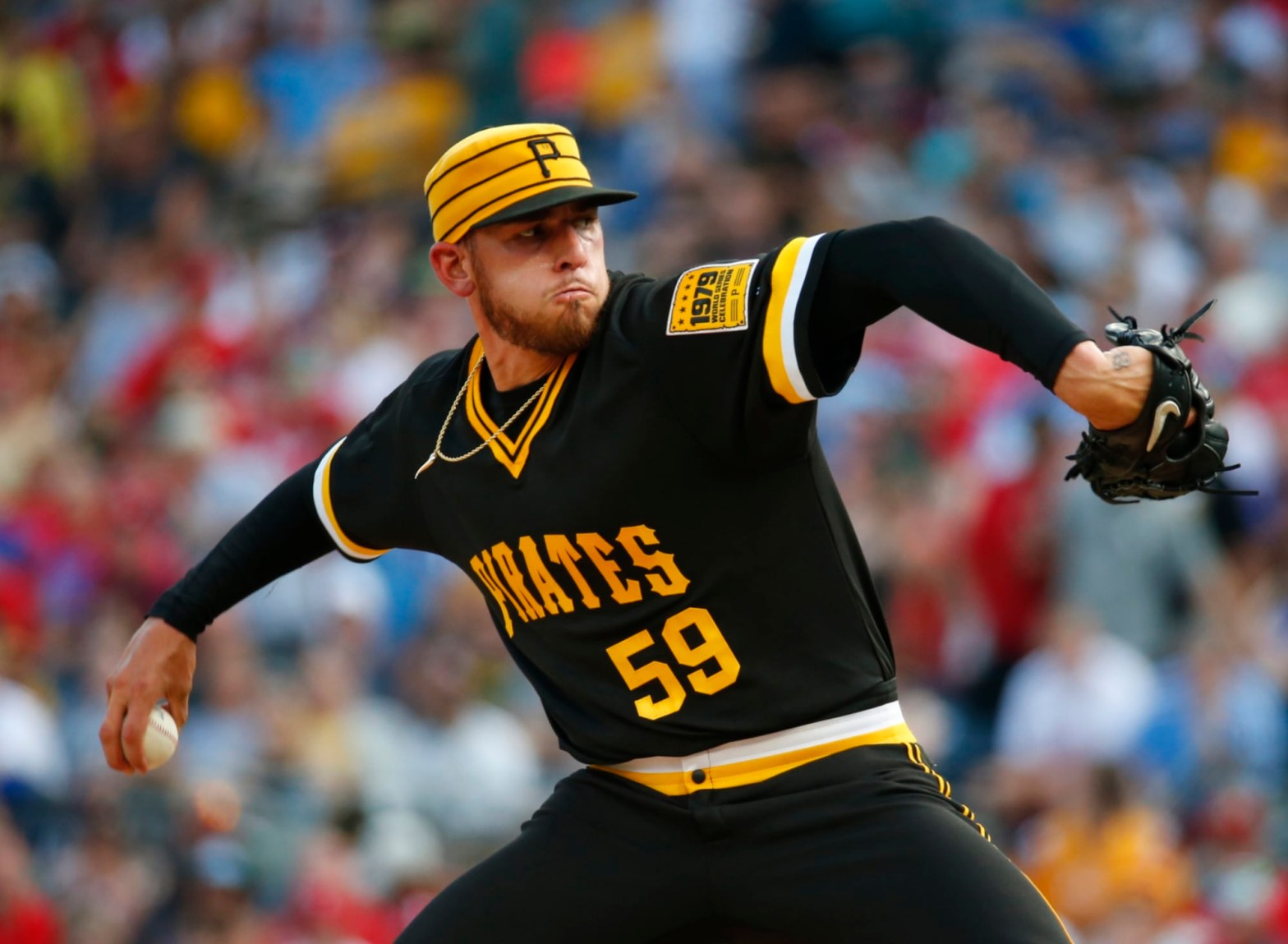
Joe’s not a star, I don’t even think he profiles as one. His stuff is really good and I think he’ll settle in as a top third starter. Let me clarify, I don’t mean top third of this team, I mean the league, and keep in mind that’s hundreds of pitchers that create that pool.

The Pirates have some really interesting and talented young pitching in the system but we all should have learned that expecting them all to progress, stay healthy and arrive together is the longest of long shots. Even if you prematurely add Rocker to the mix, asking 3 or 4 young pitchers to stay on schedule with no hiccups to produce at playoff team level by any date you can pick out of the air is a dangerous game.

Joe is a perfect player to think about keeping as an anchor for the rotation. He won’t break the bank, he’ll give you solid pitching more often than not and if he ends up being your number 4 or 5 he won’t become a locker room problem because he was never under the delusion he needed to be more.

The locker room loves the guy and so do the people who pull the trigger on stuff like this. He’s a free agent in 2023, so for Joe, this very much so is a get it done now or move him situation.

Mitch Keller

Mitch is much along the same lines as Hayes, but he is someone a team like Pittsburgh should consider extending because of where he is in relation to the other young pitchers in the system. See by the time they get here (well some of them as we discussed) Keller will have put in a solid 2 or 3 cumulative seasons. With free agency projected for 2026 they certainly have time but if the window opens when many of us think it should the Bucs could also be dealing with having to either move him in the middle of the window or trying to pay him far more than he’d be able to negotiate today.

A common theme with many of these has been for the Pirates to take a risk, but this is very much so what teams like Oakland or Tampa do regularly. With Mitch, you aren’t buying what he is now, you’re buying what he could be and potentially avoiding dealing your club a huge blow right when things start taking shape.

Jameson Taillon

Jameson is a risk too, clearly. He’s been injured more than most MMA fighters and at the end of the day the best ability anyone has to offer is availability.

Jamo will be a free agent in 2023 and I’d never suggest this before seeing how he comes back from his second TJ, but much like Musgrove, this might be a veteran worth taking a swing on. His injury history could keep him affordable and if the bet plays you got yourself a pitcher who can settle in the top half of your rotation, if it fails, you might have an expensive bullpen arm or he just retires of his own volition.

In Closing

I’m sure there are others and I’d love to hear your ideas, but these would be my top targets. I think they can get these done adding minimally to the payroll for years, let alone this year and I’m also not suggesting they go and extend ALL these guys.

Keeping your own is something that helps build credibility with a fan base and more importantly, keeps you from being in a constant state of the roster being on the same exact timeline. If the goal is to open a window and keep it open, which is certainly should be, then you have to start to create a staggered construction.

The only way to fix the mess that was created is to work on skewing the picture. There is a difference between trade value and extension value in baseball, I fully expect the Pirates to explore the latter.

What Can The Pirates Expect To Get Back If Big Joe Goes?

For anyone who follows the Pittsburgh Pirates, even casually, it has become abundantly clear that Joe Musgrove has emerged as one of the leaders within the clubhouse at PNC Park. From welcoming Derek Shelton to Pittsburgh with a Primant’s Brothers sandwich, to being the one that reaches out when a new guy joins the team and the player that others look at to set the tone for how they are going to operate as a unit. He is a mentor to the young pitchers with his work both on and off the field. Above all else, Musgrove has also been the Pirates most consistent starter over the past two seasons.

In 2019 Big Joe led the team with 11 wins, but more importantly pitched 170.1 innings, the most of his career, across 31 starts. His ERA was a solid 4.44, his WHIP stayed strong at 1.125 and his FIP (3.82) showed a little room for improvement. Then came the off-season and a new pitching coach, Oscar Marin. There was talk of a new “player-centric” model that would focus on each pitcher’s strengths, which for Musgrove was a revamped curveball and new found confidence in his slider.

Unfortunately for the Pirates and Musgrove he was unable to pitch a full season in 2020, making only 8 total starts on the year. In a limited 39.2 innings of work Musgrove was able to strike out 55 batters, while earning a 3.86 ERA and a 1.235 WHIP; ending the campaign with two strong outings. On the year his curveball produced a 53.2% Whiff Rate, while his slider was not far behind at 50.6%; resulting in a career best 12.5 K/9. It is well known at this point Musgrove was nearly traded to Toronto just prior to the deadline and that there were other interested parties, so it is no surprise his name keeps coming up in trade rumors.

However, following the season both Ben Cherington and Derek Shelton spoke about Musgrove being able to build on his strong finish to the season as they moved toward 2021; which is something Gary Morgan wrote about almost immediately and also gives you the impression that he will be around next year. Nevertheless, it still needs to be considered that Cherington and Shelton were just implementing the language sometimes used to show their faith in a player in an attempt to buildup their trade value.

When looking for comps over the past few off-seasons I was surprised to find there were two that fit the bill to a degree and even more shocked that they both involved the Pirates.

In December of 2018 then General Manager Neil Huntington was look for a trade partner in need of a veteran starter in the form of the big righty, Ivan Nova. Almost exactly two years earlier Nova had signed a 3 year deal with the Pirates for $26 million, which meant he had about $8.5 million remaining on his contract. Huntington quickly found a suitor for Nova, the Chicago White Sox, due his ability to eat innings over the previous two years and perform fairly well in doing so. Across 2017 and 2018 he had totaled 60 starts, 348 innings and 2 complete games, while putting up a consistent ERA just over 4.00. In return the Pirates received a 19 year old right hander from the Dominican Republic, Yordi Rosario, and $500,000 in international bonus pool space, which is actually not a bad return for the aging veteran.

In his 19 appearances for the Bristol Pirates, Pittsburgh’s Advanced Rookie Affiliate, Rosario compiled a 2.87 ERA, a .989 WHIP and 33 strikeouts in 31.1 innings. The international bonus pool space is something that is often overlooked because of a lack of understanding as to how it works or the fact that Pirates Fans have yet to see the full impact of these signings at the major league level. Unfortunately this is not a topic that has any bearing at this time because international bonus pool space cannot be traded during the current International Free Agency Period.

The second example is a famous one, that has more similarities to a potential Joe Musgrove trade. During the off-season in between the 2017 and 2018 seasons, the Pirates traded 27 year old Gerrit Cole to the Houston Astros in return for Colin Moran, Joe Musgrove, Michael Feliz and Jason Martin. At the time Cole was entering his second year of arbitration. The situation is exactly the same for Musgrove this off-season, however, he will not be due as much in arbitration; $6.75 million for Cole versus an an estimated $3.75 million for Musgrove.

In his final season with the Pirates, Cole had one of his worst years of his young career as his ERA rose to 4.26, his FIP (4.08) was also at its highest point and he allowed a career high 31 home runs in 33 starts and 203 innings. However, his track record of a 3.50 ERA, a 3.27 FIP and a 1.217 WHIP cannot be ignore and neither can the pitch to contact philosophy he was forced to endure. Over 5 seasons with the Pirates he accumulated a 11 WAR, with his highest (4.4) coming in his 2015 All-Star Campaign. In comparison Musgrove has totaled 4.2 WAR in his 5 years in a Pittsburgh uniform, topping out at 1.8 in 2019.

Of course I am not directly comparing Joe Musgrove to Gerrit Cole or Ivan Nova as far as the possible trade returns. This was done to give Pirates Fans an idea of the range of potential outcomes for a Musgrove type trade. And once again as I stated in the Adam Frazier and Richard Rodriguez articles a lot depends on trade market temperature, free agent availability at a similar position and with comparable performance, the motivation or desperation level of the team trying to acquire any player and the ability of Cherington to secure a favorable deal.

If, in the end, I was forced to come up with the trade value potential for Musgrove I would probably still give a general answer of somewhere between Nova and Cole. And honestly I wouldn’t rule out the possibility of an extension for Musgrove to buyout his two remaining arbitration years plus one, with potential team options for the two years after that. Either way, I am positive that we are going to hear Big Joe’s name a lot as the Pirates and Cherington navigate their way through the current off-season.

It Doesn’t Matter if the Pirates Don’t Improve in 2021. Right?

One thing that really hits home when your team reaches the bottom of the food chain in MLB is that they are staring at years of work to become a more relevant team. And if you live in Pittsburgh, chances are you see it as even more unreachable because your owner has never dedicated the money it takes to reach the summit.

It’s an undeniable truth, one that we may ignore at times so we can have actual baseball discussions but truth nonetheless. It crops up almost no matter what we’re discussing. For instance, when we discuss the possibility of extending Josh Bell many in Pittsburgh will rail that he isn’t worth it, or he at the very least isn’t worth the risk. What is really being expressed here is we know if Bob Nutting spends on Josh Bell, we won’t keep someone else long term and this team can’t afford to make a mistake like that. Problem is when THAT guy does come along, they can’t keep him either.

Again, true, at least it has been.

So, many fans have taken another approach all together. Openly wishing for another bottom basement level performance hoping a string of 7-1-1 in first round picks can drag this team up by the boot straps and force contention on a franchise loathed to make it happen through other methods.

I’m not here to say that’s a bad way to think, I get the evil genius in this way of thinking if I’m honest. I’d also caution, when you want to eventually extend some players that the team develops or are actively on the club, you might want to show them that winning mattered along the way.

One area that I’ve (and many others of course) identified as something dire in importance is the bullpen, specifically the back end. I’m very excited for Blake Cederlind and I’m cautiously optimistic about Edgar Santana, but for the Pirates it’s important that the players start seeing some reward for their efforts.

A solid bullpen will help that more than any one other thing they could pull together affordably this off season. If you have a lead after 6 innings, reason says a good team will win more of those games than they lose, but a poor team will struggle to win a third of them. That’s the razor’s edge that overall record lives on.

Now, when I say improvement, I’m talking about incremental upturn. Seeing less mental mistakes in the field. Closing a tight game out to reward a starter that gave you six strong innings. Playing people at alternate positions only after they’ve received proper training. Not being afraid to sit guys who make more money than others.

Competing for a championship isn’t going to happen in 2021, but the Pirates will probably improve just because their youth continues to develop, in addition to some key adds returning from injury. If they don’t strip the team to the bone, and nobody serious sees this happening right now, there is no reason this club can’t start to show signs of improvement.

Think of it this way, one of the top perks to hiring Ben Cherington and ultimately Derek Shelton was the focus on being ‘player-centric’. This essentially means if a player is good at skills 1-7, maybe don’t ask them to become better than average at 8-10. Some skills are non negotiable, you need to be able to field a position well enough that you aren’t a liability, you need to be able to run the bases well enough that you aren’t costing the team runs through poor decisions. But some skills don’t fit a player, and while I don’t have hard evidence this happened I feel asking Bryan Reynolds to focus on launch angle may have messed with a good thing.

Counter intuitive for a new coaching staff that claims to be about the opposite, no? On the other hand, Ke’Bryan Hayes never showed the type of power (including gap power) he did after his call up, much of that can be attributed to the team focusing on altering his swing starting back in Spring and continuing during his stay at the Altoona alternate training site.

The point is, if you’re going to be a team that claims to be focused on developing talent, and that’s your bread and butter, you better be able to show that there was some improvement when you keep most of the same players.

Mitch Keller should improve, Joe Musgrove should continue to evolve, Ke’Bryan Hayes set the bar high but he should be able to continue to show he belongs. I could go on listing just about every young guy on the roster and while I know everyone won’t take a step forward in unison, many should, IF you’ve hired the right coaches.

We don’t know the makeup of the ballclub yet for 2021, but teams don’t often shoot for being the worst in the league year over year and there’s a reason or two. One, it’s really difficult to win that race, in fact if the 2020 season were even close to full it’s hard to say the Rangers wouldn’t have overtaken the Bucs. Another is when you believe you have some members of what you hope is your future core, like Hayes, Keller, pick your poison here, you don’t want to have them think or play like bottom dwellers.

The mentality and culture of a club is also being built as you start your journey and you need only think back to Jack Wilson’s welcome to the Pirates clubhouse to see how caustic a bad culture can become. To a man, right now, all the players seem to have a fairly positive outlook and that’s great, but it’s easy to feel that way when you’ve had little choice as to where you’d play for the best part of a decade.

I could take this into a full scale ‘the fans deserve to see…’ direction here but the fans aren’t going to be HAPPY with a 5-10 game improvement, where the team itself really should be. A ten game improvement would leave them in the top ten of the draft most likely and also start to create an environment where Keller doesn’t feel he needs to throw a no hitter to ‘succeed’. It creates an situation where everyone starts to feel they’re pulling in the same direction and the individual progression creates a cumulative affect that shows up in the record.

In baseball, it’s not about championship or it doesn’t matter. Sometimes it’s about showing the arrow is pointed up, even if the angle isn’t too steep.

The Value In Trading Adam Frazier

Let me start off by saying, there is no doubt in my mind that Adam Frazier is a trade candidate for the Pittsburgh Pirates. His name has been mentioned during the Winter Meetings last off-season, leading up to the most recent trade deadline and by our own Gary Morgan more than once; including his first piece at our old site back in November of 2019. I even listed him as a tender to trade candidate in a recent arbitration article. He is a guy that probably could, and absolutely should, be moved by General Manager Ben Cherington and the Pirates at some point before his team control runs out, making him a free agent after the 2022 season.

So, let’s say the Cherington does pull the trigger this off-season and makes the conjecture surrounding Frazier’s trade a reality. What is the realistic value for a 2nd Baseman/OF that is entering his year 29 season, his second arbitration year of arbitration and is set to to make between $3.3 million and $5.2 million during this upcoming season? For this you have to take a look inside the numbers, as well as giving some consideration to similar trades that have occurred recently.

As as far as Frazier is concerned, in the equivalent of 4 MLB seasons with the Pirates, he has shown himself to be around a league average hitter (.275 AVG and 100 wRC+), with defensive upside (6 DRS IF/OF, 6 OAA 2B 2020 and 11 OAA 2019). He had also gotten some national recognition by being a finalist for a Gold Glove at 2nd Base two years in a row; finishing as the runner up both times. This past season he was set to earn $2.8 million in his first year of arbitration and slashed .230/.279/.661; adding 7 homers in the process. If extrapolated over a 162 game schedule this equates to around 19 home runs, which would be a career high.

The next step in this process was to find an example of comparable player being traded in the off-season. I didn’t have to look too far back in order to discover two that had taken place in recent memory; the first being when the A’s traded Jurickson Profar to the Padres just the past off-season. The other instance involved Logan Forsythe’s trade from the Rays to the Dodgers prior to 2017 season.

Profar had been the #1 overall prospect according to MLB Pipeline back in 2012, but had struggled at times with his adjustment to the major leagues. In the two seasons before his second trade in as many years, Profar had batted .238 between Texas and Oakland, while combining for 40 home runs. His defense was exceptionally poor, as he posted a -6 DRS at shortstop with the Rangers and -15 DRS with the A’s at 2nd Base. When Oakland traded Profar to the San Diego Padres he had only one year of control left and was due $5.7 million in his final year arbitration, so the situation is a little different than Frazier’s, but I wouldn’t expect the return to be that much higher.

On December 2, 2019 the Padres sent Catcher Austin Allen, along with an eventual player to be named later, outfield prospect Buddy Reed, to the A’s for Profar. In 34 games and 65 at bats, the former # 25 Prospect in the system as of 2018, Allen had hit .215 with no homers and 4 doubles for the Padres the previous year, although he had torn up AAA to the tune of a .330 average with 21 homers before being called up. Reed on the other hand had ranked as high as the #13th best prospect the same year as Allen, but had not reached above AA at the time of the trade. During the 2019 MiLB season he slashed .228/.310/.338 with 14 homers.

The second trade I mentioned took place on January 23, 2017, sending Forsythe, to the Dodgers for 24 year old right hander Jose De Leon. In his time with the Rays Forsythe had batted .262 with a .752 OPS and 43 home runs over 3 season. As a defender who played all over the infield, with a little bit of outfield mixed in, he was adequate at almost every position. Overall his play was good enough for a WAR of 1.3, 4.6 and 3.5 compared to a 1.1, 2.6 and 2.0 for Frazier. He was also under team control for 2 years thanks to one year remaining on his contract with a team option for 2018, which the Dodgers ultimately picked up. For De Leon, while he was in the Dodgers organization he ranked as high as the #3 Prospect and moved fairly quickly through the system. In the year prior to being traded he pitched in AAA for the majority of the time, earning a 2.16 ERA and .938 WHIP in 16 starts. He also struck out 111 batters in 86.1 innings, resulting in him being called up to the big league club for 4 starts at the end of the season. He would put up a 6.35 ERA and a 1.529 WHIP across 17 innings of work. And for those that don’t trust ERA his FIP was a 6.97, so it all checks out.

Once again this is not a discussion as to if Adam Frazier should or should not be traded because it is most likely inevitable. It is just a simple exercise to see what the return for the two time Gold Glove Finalist could be, but not necessarily will be. A lot of different variables could affect this; such as trade market temperature, free agent availability at a similar position and with comparable performance, the motivation or desperation level of the team trying to acquire Frazier and the ability of Cherington to secure a favorable deal.

For now the Pirates sit and wait as there is still a decision to be made concerning Frazier’s arbitration before anything can formally be put on the books in this 2020-21 MLB off-season.

Veterans in Baseball Hold a Special Place for Me

Today is Veterans Day here in the United States of America, November 11th every year. This day is a time for sports writers all over the country to write flowery retrospectives about the host of veterans who also became heroes on the baseball field as well as the battlefield. I’ve written them myself, Ralph Kiner, Roberto, the list goes on and on.

This time though, I thought I’d take a bit of a departure and write about what this day and those players mean to me.

First, a little about my background, well, my Father’s more specifically. My Dad started his military career as Vietnam was in it’s infancy. Proudly serving in the United States Navy for 33 years and retired a Master Chief. His career took him from active duty and multiple deployments all over the world and ultimately to reenlisting to the reserves after trying to be a civilian only for a while.

He ran training camps in North Carolina, coordinated supply for most of the Eastern Seaboard and transitioned into the Sea Bees to finish his career. I’m so proud of him and what he did to protect our country, I’m even more proud of how he embraced it.

He was and is quite proud of his service and what he accomplished, in fact if he had it his way he’d probably still be involved, but that didn’t mean he liked to talk about it. In fact one of the only things I knew about his service came from my Uncle George who my Dad met on his first boat. George took my Dad home with him on leave where he met my Mom and well, here I am.

The baseball connection and my interest in history were sparked at an early age. I was a sports nut, played just about everything you could play, watched everything that was on TV and did it all without my Dad who largely doesn’t care about any sporting event save the annual Army-Navy game.

I remember one Christmas I had asked for GI Joe’s, like a ton of them, and my Dad was thrilled that I was interested in the military. In reality I just wanted a toy and when he asked me what I wanted to be I said a baseball player. At that age I couldn’t sense the downturn in his enthusiasm to talk about it, but he started to tell me about baseball players who did both.

He talked about Bob Feller, Roberto Clemente, Ralph Kiner, Ted Williams, Willie Mays, I mean, this was a list of guys I’d heard about on my Earl Weaver computer game for the Tandy 2000, but hearing him mention them made it come to life for me somehow. I started collecting baseball cards and we would go to flea markets where I would buy old cards with my grass cutting money.

One day showing him my collection he asked why I was collecting the players I had in my binder and I told him they were all in the military too.

As a father myself now, I understand what was going through his head. It’s that moment when you realize your kid heard you and cared about what you were saying, even if they didn’t seem to get it at the time.

It’s easy in today’s world to forget that serving wasn’t always a choice and it’s because of the efforts of those generations that is no longer fact. They fought for us, they gave us part of the prime of their lives, some gave their lives, and baseball was how I found the connection to engage.

I have immense reverence for those players, and what I’ve come to realize is they’re really a surrogate for how I feel about what my own Father did. They are the vehicle, but he is the embodiment of what I’m really proud of.

On this Veterans Day, let’s celebrate those players, but let’s also make sure we take a moment to thank those around us who served without baseball as their next stop.

Thanks Dad

The Boring Nature of System Construction

One of the things the Pirates most needed to do this offseason is also one of the most boring, and it deals with the engine of the machine. The actual Farm Director, scouts, instructors, all in an effort to become more player centric throughout the organization.

The Pirates hired John Baker to fill the top role, he’s a former player who most recently was a mental skills coach in the Cubs system. I could go on and tell you all about his background and why I think this is a good hire but let’s be honest, most of us don’t really know if this is a good hire or not.

How many times do you see a car driving down the road with a non-factory spoiler, custom exhaust pipe, tinted windows, but the car itself sounds terrible? That’s because the engine is boring, it’s not a shiny new toy that everyone can see and understand. That’s what these system moves are like to me.

That doesn’t make them unimportant, exactly the opposite actually, but there is no way to evaluate the effectiveness of these changes in the near term and even once they’ve driven the operation for a period of time its difficult to say these good things happened because of this person.

What I can say is the Pirates have defined player centric as the ethos and I have to believe all their hires will uphold that thought process but we really won’t have tangible evidence for years. Players will come up and some will succeed, others will fail. When they succeed the farm system will get credit, even if it isn’t earned and when they fail the farm system will get blamed even if it wasn’t their fault.

What’s really important is do these new hires share the vision of Ben Cherington, is his vision the right path? We won’t know for some time. Let’s say Nick Gonzales arrives in Pittsburgh sometime in 2022 and he is everything we hoped he’d be, a rookie phenom, every bit what a 7th overall pick should be. Can you say the system did that? Or do you instead give credit to the pick itself? Maybe it’s a combination, but we’ll never really understand to what degree.

Now, we had plenty of evidence that the last regime was doing more harm than good. That was accrued over the best part of a decade. We’ve heard players leave and openly criticize the approach that was taken with them. We’ve seen players leave the system and thrive under the tutelage of different instruction. We’ve watched number one picks languish in AAA never forcing the club to call them up by either being forced to play a style they didn’t fit or focusing on one metric that just wasn’t going to ever be part of their repertoire.

From military style training to overt mental warfare Pirates prospects have been through quite a bit, so maybe the real takeaway here is change. Change was needed and even if the new hires aren’t perfect in the long run at least they aren’t the same group that mismanaged almost every player in the system in the last decade.

I look at a player like Ke’Bryan Hayes. Here’s a guy who obviously got through the system and made it to MLB obviously intact. I also wonder how much of that to attribute to the system versus his father versus himself.

It’s not like the Pirates have had nobody work out, it’s more about how many expected contributors failed, or the fact they’ve had very few come out of nowhere to become part of the solution.

I often hear from fans, “let’s hope they don’t screw him up” and while it’s a simplistic way to talk about the system, it’s also accurate beyond measure.

The moves made this off season look to correct the course, here’s hoping they’ve done exactly that.

Five Thoughts at Five 11/9/20

Sometimes the best way I can think of to kick off another week of Pirates coverage is to get some topics off my head and out to you. The conversations we have really give me insight into what you want to read about, what interests you and the topic format really get’s us talking.

Today, I’ve got some rather interesting topics floating around my head and I’d love to talk about it with you all evening.

1. Bye Bye Burdi

I was a little taken back by the news Nick Burdi selected free agency rather than accept the assignment to AAA and recover from his recent procedure under the banner of an MLB team. I guess I could see a team picking him up and taking a chance, I mean his stuff was electric, but I can’t see it being too awful committal. I really am pulling for the guy, and I also hope he doesn’t read this because I just can’t see this as a smart path. I think the Pirates were more than happy to keep him on the club and worked to rehab with him, in fact Ben Cherington said just that, I can’t see him finding another, at least not until he’s started rehab on his own with an independent trainer for a few months.

2. I May Have Pronounced the DH Dead Too Early

Early into the playoffs Rob Manfred said in an interview the only rules that looked to return for 2021 were the runner at second in extras, and the three batter rule for relievers. I took that to mean the DH was going to hibernate until the CBA negotiations following next season (more likely middle of the season), but recently MLB offered the DH to the players in an effort to get the players to approve extended playoffs again for 2021. As a fan, sounds nice to me, but to the players, a very unequal offer. While the players do get an extra player on just about every roster and some other fringe benefits they also don’t get an extra slice of pie for all the money MLB will rake in for extended playoffs. That doesn’t mean it’s dead though, it just means the players want either a bit more money for the playoffs or MLB will have to toss in something else the players like and MLB doesn’t really care about. This could get done.

3. Keone Kela Could be the Pirates Top Free Agent Pickup

For all the options on the table for Ben Cherington, perhaps this environment could create a situation where Keone Kela could become an affordable keep for the Pirates. Now, part of me thinks, here’s a guy who hasn’t stayed on the field but when he has there hasn’t been much to complain about. The back end of the Pirates bullpen needs addressed, and I mean even if they plan to just seemingly let it ride and see how close they can come to a second consecutive number 1 pick. Heading into 2021 if they do nothing we’re looking at Edgar Santana, returning from Tommy John, right into a suspension being almost counted on as at least a set-up guy. Kyle Crick who has lost velocity regardless of whether the Pirates will admit it or acknowledge it’s importance. He lacks control of his most effective pitch unless he reduces the spin rate of the slider which renders it ineffective. Michael Feliz who many have on their short list to not receive a tender, had his own injury concerns and is very hit or miss otherwise. Blake Cederlind is a rookie with all of a handful of appearances under his belt one of which was a blow up. He’s talented, has a wicked fastball and looked poised out there. I don’t have anything negative to say about him aside from the fact he’s very young.

What I’m saying here is, who do you TRUST from that list? Any one or two of them could wind up killing it this year, sure, but there is no lynchpin, I’d be tempted to see if Kela is interested in sticking around for at least another year to give the Bucs some stability, potential big time upside if healthy and himself a chance to increase his value.

4. The Farm Director Hire

Jason Mackey reported this week that John Baker had emerged as the front runner for the position. He’s been a player in the league and after his career he transitioned to Operations Assistant for the Cubs. The Bucs also relieved Dave Turgeon from his post at AA Altoona. Player centric is still the focus from Cherington on down according to Alex Stumpf of DK Pittsburgh sports and you have to imagine Cherington is really wishing he was here slightly earlier to save Michael Ryan the man Turgeon was brought in to replace because Ryan was one of the few in the system who actually fought to become more player centric. He was very successful too, he just made the wrong suggestions to the wrong people. Ryan was hired to coach AA Tennessee in the Cubs organization in 2020 which obviously didn’t happen. If he is available I wouldn’t be shocked to see the Pirates go get him back.

On the Farm director hire, I’m not sure I’d go with a first timer here but it speaks to how involved Cherington is with this particular area of the system. He has a vision and whomever he brings in will implement it, perhaps a young guy is best suited for that type of project.

5. Extending Josh Bell, the Good, the Bad, and the Possibility

Now, let me start by saying plainly, I think this is unlikely as of right now. There I said it. But you have to give it some weight as Cherington has mentioned it twice and Scott Boras mentioned the conversations taking place as well.

If potential were currency Bell would already be a very rich man, but he hasn’t put it together and had a complete season yet. For many players this would be the story of a guy who gets hurt every year and never has a full season, for Bell however it is the story of a guy who sometimes looks like he’s trying to swat bees with his bat rather than baseballs.

When he’s good, he’s the Pirates best player, when he’s bad he becomes instead their biggest liability. Risk is its own reward at times and while Boras typically takes his clients to free agency, he could be open to an exception in this case. For instance, Bell has two years of control left and the Pirates could offer to buy out those years and offer a third. This would buy both player and organization time to increase his worth while only sacrificing one year of his free agency.

It would almost immediately increase his value in a potential trade should he start to perform and obviously help the team as well. If he doesn’t improve, hey, it’s one extra year, the value problem isn’t much worse really and you’ve essentially created some good will with the fans for a minimal expense.

With the CBA silliness and agents getting a bit shaky on what the future market might look like, the Pirates could have a chance here to get something done. At the very least I went from dismissing this off hand to believing it might be a good move. Don’t stop with the word extension, it doesn’t mean you’re getting married, sometimes you are just buying time.

The MLB Free Agent Market Has Broken Its Seal

The Toronto Blue Jays signed Robbie Ray and it starts to put clues on the record to help us understand the market. The agreement is 8 Million for 1 year and it shows us how both players and organizations might be thinking.

Here we are in November, we already know the Winter meetings will be virtual and anyone who has experienced the new Zoom world we live in understands the limitations it creates. Sure there are breakout rooms but sometimes you don’t want everyone to know you are meeting with someone in particular. It’s not as simple as grabbing a coffee together and having a quick intel meeting or maybe letting a nugget you picked up fly to a friend. It changes the dynamic of the entire process and while I’m sure they’ll find a way to make it productive, I also wouldn’t bet on it being the official, unofficial kick off to the hot stove they’ve been in the past.

Couple things, it’s a really slow market for starting pitching. You have Bauer at the top of the food chain, followed by Stroman then a full tier below Tanaka, Walker and if he doesn’t retire, Morton. Ray is closest to this category even if he did have a really sub par 2020.

Technically this is a retention move for Toronto as they traded for Ray at the deadline to get him and 8 million isn’t a ton of risk. They also have to be bracing a bit for losing Walker so in some ways they’re just making sure they don’t have to go all the way back to base camp before continuing the climb.

Craig and I have both been saying most of the off season we don’t see the Pirates being nearly as active moving players as many ‘rebuilders’ would like to see, specifically moving Joe Musgrove seems less likely as both Shelton and Cherington specifically referenced building on what Musgrove did toward the end of 2020 is what they look forward to most. That said, when you look at who’s out there on the market to be signed, man it’s got to be tempting.

If Robbie Ray is worth 8 million a season, I’ll be honest, Chris Archer might even get a 6 or 7 million offer for a year, he might even get it from Pittsburgh. On the other hand, I totally think this is an outlier and a GM under pressure to make sure he retains something for the prospects he moved trying to make the playoffs last season in acquiring Walker and Ray.

It still sets the market though, so when Bauer gets offered 20 million he can use Ray as a starting point and easily show how much more accomplished he is and the trickle down goes on from there.

If there is an area to be exploited on the trade market this year it is for starting pitchers and the Pirates may be able to sell one at above normal market value and they really should consider it. Again, should they prefer to hold all their cards, I can understand that, but if they can get more than any of us imagined for Kuhl or Musgrove at this stage in the rebuild I’m not sure I could pass it up.

It’s early and nobody serious bases an entire case on one piece of evidence. There will be more signings but as you watch the top options come off the board keep your eyes on who didn’t fill their need and consider the possibilities, because I assure you the Pirates are.

Free Agent Targets That Ben Cherington Should Consider, BUT Probably Won’t

In my most recent article for the site I wrote about some potential free agent targets for Pittsburgh General Manager Ben Cherington from a realistic point of view, which was not met with a warm reception. I complete understand the reasons behind these reactions and truthfully I did expect them to be any different. However, as other players were suggested to me, most of whom are out of reach for the Pirates by my estimation, I couldn’t help but realize that there has to be a middle ground or I at least hope there is one.

We all know that there are certain free agents Cherington is not going to waste his time with; including the likes of Trevor Bauer, George Springer, JT Realmuto and DJ LeMahieu. Thinking the Pirates could even have legitimate shot at signing any player of this caliber and cost is beyond pipe dreams; it downright borders on madness. There is even a tier, or two, below this that can only be described as a wish list. A little bit further down is the sweet spot; where it isn’t as dire as I had originally projected, but it isn’t so far fetched that your sanity is being questioned.

The types of players that exist at the halfway point in between reality and fantasy are ones looking to rebound (aka reclamation projects), borderline major leaguers stuck due to being blocked at a position or you think you can fix and those likely to bring a decent return if traded/flipped. However, keep in mind they must also be brought in at a reasonable price; shrinking the proverbial talent pool to only a handful of options. For your convenience I have listed them from most to least likely.

Sam McWilliams is a 6’7” swing man that can pump his fastball up to between 96 to 98 mph and shined in AA back in the beginning of 2019. Through 15 appearances and 11 starts he put up an impressive 2.05 ERA and a 1.255 WHIP; and this was when he was throwing in the low 90’s. He spent the season at the Rays Alternate Site in Port Charlotte and was even activated at one point, but never got into a game.

Richard Urena made the jump from AA to the majors in 2017 for the Toronto Blue Jays and had his best year in 2018, when he slashed .293/.340/.364 over 40 games and 108 plate appearances. A player that is versatile enough to play all over the diamond, Urena was made expendable by the emergence of Bichette, Biggio and Vlad JR.

Trey Supak is a player that should be familiar to any Pirates Prospect, Draft or Trade Junkie. Supak was Pittsburgh 2nd Round Pick in the 2014 MLB June Amateur Draft at 73rd overall and only 9 spots behind Mitch Keller. He ultimately only spent two years in the system before he was shipped off to Milwaukee with Keon Broxton for 1st Baseman Jason Rogers; eventually rising through the Brewers organization and all the way up to #11 on their top prospects list in 2019. This was mostly due to a strong campaign in AA, where he posted a 2.20 ERA and a .0872 WHIP in 20 starts across 122.2 innings. He did struggle with the promotion to AAA as his ERA ballooned to 9.30 and his WHIP crested at 1.667, both career highs. However, it was reported that he reported to Spring Training earlier this year about 25 pounds lighter, a lot healthier and more motivated by a new arm path he had developed over the off-season. Unfortunately he never got to show it off as the 6’5” 250 righty spent the majority of the year on the 40-man, but was outrighted in mid-September.

Cam Bedrosian is a former 1st Round Pick of the Los Angeles Angels in the 2010 MLB June Amateur Draft, who has actually improved in almost every major category over the past 7 years in Anaheim as a regular out of the bullpen. Since 2014 he has seen his ERA shrink from 6.25 to 2.45 and his WHIP fall from 1.810 to 1.091, although is best year by WAR (1.4) was back in 2016.

Jake Marisnick only got to spend 16 games in a Mets uniform after the off-season trade from the Houston Astros. In a small sample size of 33 at bats he hit .333 with 2 homers. However, you would be making this for his glove more than his bat, even though he did have double digit home runs over the past 3 seasons. From 2016 to 2019 Marisnick totaled 39 DRS, with his most consistent performances coming in centerfield.

Johnathan Schoop is a few years removed from his 6.3 WAR All-Star season in Baltimore, but not so far detached that all of the power from his 38 and 35 home run campaigns has gone away. In 44 games and 162 at bats Schoop was able to crack 8 homers and 14 extra base hits; including a career high 2 triples. As a regular second baseman he has has yet to record a year with negative DRS and had a 2 OAA last year.

Now I know the chances of Cherington and the Pirates signing any of these players is slim to none at best. I don’t need anyone to tell me that. However, it’s not like any of these moves would break the bank, so it’s only reasonable to explore all options; except the pipe dreams. Those will drive even a sane man crazy.

While conducting research for this article one of my favorite targets, Jose Peraza, was signed to a minor league contract with an invitation to Spring Training by the New York Mets. This is extremely frustrating to me because getting a young player, who had 2.6 fWAR just 2 years ago is something the Pirates should be first in line for; especially at little to no cost if it doesn’t work out.