Recognizing RichRod’s Trade Value

As the 2020 Trade Deadline approached, only a little over a month into the 60 game season and with less than a full month to go, Pittsburgh Pirates Reliever Richard Rodriguez was discussed as one of the potential trade pieces for General Manager Ben Cherington. After giving up what turned out to be the game winning 2 run homer in the season opener versus the Cardinals, Rodriguez became nearly touchable as he struck out 17 batters in 12.2 innings of work. He also did not allow many base runners as his WHIP hovered around .8025. When the deadline passed on August 31st plenty of fans were surprised that the 30 year old pitcher was still a member of the Pirates bullpen.

The anticipation that led up to this point in the year has carried over into the impending off-season, as Rodriguez is being considered by many as considerable trade piece yet again. These feelings have been reinforced by the fact he finished the season strong with 16 strike outs and 2 walks in 9.2 innings, not allowing a runner to cross the plate in the last month. Also taking into account that he is just entering his first year of arbitration, with 3 years of team control, it is possible that the predictions of RichRod being moved before the start of the 2021 could come true. However, I am of the belief that the chances of this happening are not very high.

The main reason for me being of this opinion is that the performance level of relief pitchers from year to year are extremely unpredictable. Just look at Rodriguez’s history in Pittsburgh. In 2018 he emerged as a stalwart out of the Pirates bullpen as he earned a 2.47 ERA and a 1.067 WHIP, with 88 strikeouts in 69.1 innings. Then came a disappointing 2019 as he gave up 14 homers and only struck out 63 over 65.1 innings. He also saw his WHIP rise to 1.347. Even though he rebounded this past season to his 2018 form, who is to say that he won’t revert back to the struggling reliever he showed that he could be during the previous year?

Another reason arises out of something that occurs every off-season as additional options for bullpen help become available in free agency. The major benefit of going the free agent route is that it does not require you to give up any prospects in order to acquire a player. It can also be the cheaper alternative, depending on the level of signing that a team chooses to make. For instance a player signed to a Minor League Contract with an invitation to Spring Training has the opportunity to earn up to $1.25 million dollars if they make the opening day roster, which would be right around the $1.1-$1.7 million Rodriguez will be due in his 1st arb year.

Now let’s consider for a moment that my expectations are incorrect and Rodriguez does end up being dealt, what is the potential return that Cherington could expect in return for the setup man/possible closer? In an attempt to figure this out I wanted to find an example of reliever being traded in the off-season. I didn’t have to look too far back as the Tampa Bay Rays traded their closer Emilio Pagan during last year’s off-season. In 2019 Pagan had emerged as the Rays go to pitcher out of the bullpen in his year 28 season, having been acquired from the A’s during the previous off-season. In 66 appearances for Tampa Bay, Pagan posted a 2.30 ERA and a .829 WHIP, with 96 strike outs and 20 saves. This was good for 2.3 bWAR and 1.5 fWAR respectively.

After having such a productive season it was quite a surprise that Pagan was traded for the second off-season in a row. However, the Rays were ultimately unable to resist the trade offer from the Padres. In return for Pagan they received a young controllable outfielder in Manuel Margot and catching/outfield prospect Logan Driscoll, who San Diego had drafted in the 2nd Round of the 2019 MLB June Amateur Draft. In three full seasons Margot had hovered in between .263 and .234, but he had shown power potential by hitting 12 homers in 2019. Mostly known speed and defensive Margot was seen as insurance in the off chance that Kevin Kiermaier was traded or more than likely was unable to remain healthy. Driscoll’s appeal appeared to be based more on the Rays fascination with players who have displayed position flexibility as he sits near the bottom of Tampa’s top 50 prospects as reported by Fangraphs with a future value of 35+.

So, how would RichRod’s value compare to that of Pagan? Well, Pagan was almost couple of years younger at the time of the trade, with one more year of control. He had accumulated a higher WAR in his best year than RichRod, who’s WAR was 1.4 according to Baseball Reference and 1.3 on Fangraphs in 2018. Although, no one can be certain what it would have been in 162 games in 2020, so the argument can be made that the return could be fairly similar. However, you would then have to ask yourself if you would be satisfied seeing a Margot and and a Driscoll coming back to the Pirates as they said goodbye to RichRod.

Manuel Margot has performed exceptionally well in the playoffs to this point; batting .296 with a .959 OPS and blasting 5 home runs. He has also shown up on the defensive highlight reel more than once. For his career, prior to arriving with the Rays, he has slashed .248/.301/.394 with 33 homers in 3 full years and short stint in 2016. During this time he accumulated 6.4 bWAR and 4.3 fWAR, mostly thanks to his defense. He did however, come with 3 years of team control.

Driscoll on the other hand is an unknown as he only played in 39 games in Low A ball while in the Padres System, along 6 games in the Arizona Fall League back in 2019. Prior to being drafted he was a stand out at George Mason University for 3 seasons, but has yet to really get his professional career started mostly due to the cancellation of the 2020 Minor League Baseball season.

For me it is hard to say if this level of return would be enough to move the needle in favor of letting go of Rodriguez. I would much rather see him moved at the in season trade deadline to a team that is desperate for bullpen help, but this would be gambling on the fact that RichRod shows off his 2018 and 2020 form for the majority of the year. It also doesn’t take into account that the eventual goal or plan could be to flip a Margot level player down the line if he continues to perform as well as he has in the playoffs. This is one of the reasons why trading is so difficult and the answer isn’t always as clear as it may seem.

Top Ten Takeaways From the 2020 World Series So Far

I’d love to be covering the World Series for everyone this year, but that was never in the cards for this club. That doesn’t mean we can’t take away some really important things from what we’ve watched.

10. The Rays have had Austin Meadows, Ji-Man Choi and Joey Wendle riding the pine much of the series. Good teams can survive the bumps and bruises of a season by having depth like that. The Rays and Dodgers have benches that could start in a ton of towns.

9. As much as the game has changed, there is still no substitute for a dominant starting pitching performance. That hasn’t prevented late inning heroics but Clayton Kershaw made one game almost uncontested.

8. Tyler Glasnow isn’t the finished product many fans would have you believe. That’s not to say we Pirates fans should be happy he was moved but he’s also not an example of someone who has completely realized his potential either.

7. Who says defense doesn’t make a difference? Mookie Betts is probably the best player in the game right now but his defense doesn’t get nearly enough coverage. He’s fluid, athletic and when it’s catchable, automatic.

6. The Rays Bullpen is unmatched and it makes up for any shortcomings they have in the rotation. Building a strong bullpen was one of the only things Neal Huntington consistently did well and its easy to forget what a difference maker it can be.

5. Joc Pederson played in 43 games for the Dodgers this season with only 138 plate appearances. He hit .190 and only hit 7 homeruns. This has earned him a seat on the bench for much of the playoff run but he’s easily be the third best hitter on the Pirates right now. That is perspective that scares the hell out of you and really shows the divide.

4. A small market can win but literally everything needs to go exactly right. They aren’t the first or last team with a low payroll to make it to the Series, but after watching what they put together this season, it really illustrates just how difficult it is to finish the race. Eventually masking deficiencies gets exposed.

3. The Dodgers are going to be good for a while. Aside from Kershaw their staff is young and if they choose they could hold on to Seager and Bellinger. They spend but they also build better than any team in the league, yes even better than Tampa.

2. The solo shot parade that allowed the Rays to reach the series might prevent them from winning it. The Dodgers hit homeruns too but they don’t sacrifice traditional baseball to do it. Wisely moving runners over and taking the opposite field base knock that scores two.

  1. For the Dodgers, its been 32 years and approximately 3.6 Billion dollars since the last time they won the World Series. The Rays haven’t even existed that long.

Sports Constantly Evolve, So Why Do We Always Hate the Changes?

Sports are a huge part of my life and every sport I watch has changed rules and style of play over the years. For some changes there aren’t any hard and fast points where you can say the switch flipped. For others rule changes prompted the seismic shift in our games.

Watching baseball the past 5 or 6 seasons in particular we’ve seen one of those shifts. Many call it the three true outcomes, the propensity for every at bat to end in a strikeout, walk or homerun. Stealing bases is now something only attempted by the absolute fastest players in the league. A strikeout no longer carries stigma with it. Years ago a 1 for 4 performance with 3 strikeouts and a double would have your coach fielding questions about this guy sticking in the lineup or lacking plate discipline. Today it has almost become a badge of honor for practicing patience by continuing to play the guy knowing eventually that double would come from it.

Growing up, the Steelers would win football games by running the football 50-60 times a game. They would just line up with both sides knowing fully what was coming and happily take the 3.2 yards per carry. In 2005 they rode that and a stifling defense all the way to a Super Bowl Championship. The game has changed. New rules on how the secondary penalties would be called led to the advantage being heavily in favor of the Offense. Bill Cowher once said 3 things can happen when you throw a pass and 2 of them are bad. Well the odds evened as pulling a flag for pass interference became just as prevalent as the other 3 possibilities.

The NHL was victim to the most boring dynasty to ever visit the doorstep of professional sports. The New Jersey Devils instituted the neutral zone trap. It was unstoppable, nobody could break through it and if they did Marty Brodeur was waiting to clean up the scraps. After the league had seen enough and fearing that fans didn’t like watching a skating chess match, the league changed the rules. Eliminating the two line offside pass opened the ice just enough to allow offense to break the trap.

Even since that change hockey has morphed several times. When the Penguins won the cup in 2016 they did so with an extremely light team. Light is what we used to call a club that lacked thumpers, enforcers and power wings. What it came to be called is fast. Speed took over the NHL and in many ways it eclipsed hands. Right when this was happening before our very eyes the West was still firmly in the heavy, bruising era of hockey and the speedy Penguins skated circles around the Sharks.

Back to baseball, we’ve certainly seen rule changes affect the sport. One that goes under the radar is the league enforcing a more consistent strike zone. Back in the era I grew up watching a strike above the belt was just not normal. Sure a pitcher would get a call once in a while but now it’s consistently called.

Baseball’s absolute deference to analytics has created situations I never thought I’d see. On Saturday I watched a World Series game in which the Rays used four outfielders for an entire inning. It worked, as all three Dodger batters willingly flew into the congested outfield for easy outs. Maybe you were like me, wondering why in the world all the batters didn’t even consider altering their approach.

Don’t get me wrong, I’m not mad at the Rays for taking full advantage of what the game has become just like I won’t be mad when one day a team starts coaching their players to beat it. One day soon a team will see their opponent put all the infield on the right side and the approach will change to punching the ball opposite field. If and when it happens enough at least that one team won’t get shifted, at least not to the extreme degree we’ve seen recently.

If they manage to win more than they lose, other teams will pick up on it and things will start to change. As soon as someone can prove that swinging for the fences every at bat regardless of situation isn’t as productive as going with the pitch and taking what they give you things will change.

All sports are copycat leagues and some bold sumbitch has to be the trail blazer. Mike Sullivan was that in Hockey. The first team to do it in baseball will undoubtedly catch most opponents off guard, and that coach will look like a genius. Most older fans won’t see it that way, they’ll just take it as proof they finally screamed at their TV loud enough that someone heard them.

I’ve heard the takes that the game isn’t entertaining because of how it’s played right now but trust me, when your team wins you won’t care how they do it. In the early 90’s I loved the thunderous hits that Ulf Samuelson delivered for the Penguins and the energy it brought, but when they won the cup in 2016 skating past opponents trying to line them up for the same type of hit, I don’t recall whining that we didn’t have a thumper.

In baseball teams must play to the strengths of their roster. There used to be fast teams that small balled the hell out of you all game long. Murderer’s rows that could take you deep three or four times a game and balanced clubs that could beat you no matter what hole you left them to fight through.

That will come back, but it will take a courageous coach who sees things differently and isn’t afraid to stake his reputation on it. The game doesn’t need to legislate shifts out of the game to have teams cut down on it, no, that’ll come from having it beaten consistently.

Shortening the game has been a focus of this commissioner and it hasn’t really worked. In fact the number actually crept up this season by a few minutes. Games with 28 combined strikeouts will do that. The obvious rule change would be to tell batters once they step in the box there they stay until the at bat is over, but does it really matter? If they trim 20 minutes off the time it takes to play a baseball game are teens suddenly going to line up to watch? My guess is no, but I understand trying to do whatever they can so long as the game doesn’t suffer.

To me, the propensity to induce long at bats and putting the ball in play at all time low percentages probably play more into the length of games than anything. In other words, at some point it will take care of itself.

Change happens all the time, as I’ve said before, if you don’t like how the game is played right now, check back in five years from now and you might like what you see.

The only thing that doesn’t change in life is that things change.

Why is Making Changes So Difficult for This Version of the Pirates?

The easy answer, and the one most people that don’t want to really consider every angle will of course be Bob Nutting not spending money. Look a little deeper and you start to understand that even money wouldn’t prompt Ben Cherington to deliver an overall facelift for the club. At least not an immediate one.

The list of players that happen to be too young to give up on is far too big. Now, let me define that just a bit, not all young players are in this category. Kevin Newman is a former number one pick, he plays a steady, not excellent, short stop and thus far he’s been shaky at second. He had an excellent rookie campaign and struggled along with everyone else in 2020.

I hear quite a few people ready to give up on Kevin, and they might well end up being right, but if you truly want to see this club rise from the ashes at some point, its a very poor plan to start casting off first round picks that played an entire season hitting over .300. This isn’t to say if someone would want to trade for him and give you real value it should be ignored, it simply means you, me, the coaches, scouts, other clubs, none of them really know what Kevin can be yet. Potentially more importantly, he hasn’t shown enough to warrant a solid return just yet and is exactly the type of player who could leave and become a real contributor for another franchise.

Oh trust me what’s his name from Brookline, I know you KNOW. I’m not here to entertain that kind of stuff. Opinions are fair, everyone has those and every one is free to opine. If your GM does that sort of thing, I’m afraid you’ve got some rather large issues.

Kevin is one example, but you can easily lump Reynolds, Tucker, Hayes, Keller, and more into that group. They have yet to build value, they have serious amounts of team control left and you have to weigh that out.

Rebuilding this team doesn’t mean everyone here has to go, it also doesn’t mean everyone here should go. Unless the Pirates want to find themselves in the same situation 4 years from now they’ll need to sift through this roster and make sure they aren’t tossing out the gold nuggets with the rest of the pebbles.

The fans will change their opinion on a player month to month, year to year because that’s what fans do. Everyone gets that but your GM better not. That person needs to understand where they are on the scale. Are they on the rise, on the decline, or are they simply never going to evolve past where they are right now?

The other day I saw a poll question from our friend Ethan who does the Locked on Pirates podcast in which he asked who has a brighter future? Brennan Malone or Mitch Keller. Now only 17 people responded to it, so huge grain of salt but nearly 70% said Brennan Malone.

First, players in your system are always going to have a bright future. Especially in a place like Pittsburgh, because we’re always looking 3 or 4 years down the road. Malone is talented and I personally believe he’ll be a good pitcher for the Pirates one day, but he isn’t anywhere near being here. There is a whole lot that needs to happen between here and there. Mitch is already here and if anything he is victim to arriving at a low point for the franchise.

I already mentioned this on Twitter but it’s impossible to compare these two at this point, but the responses to the poll show what fans do. They see a bad baseball team and automatically assume nobody good could possibly play for them. It’s this kind of thinking that gets a pitcher like Tyler Glasnow moved, and do remember he showed even less than Keller has in his 17 starts in a Pirates uniform.

Unless you find it really entertaining to watch former Pirates play in the post season, I suggest rather than assume Mr. Cherington should move everyone for a bag of peanuts we embrace that this team isn’t going to turn around in a blink of an eye. Its a process, one that includes filtering through what’s here.

There are only a select few on the roster who need decisions made in the near term. Jameson Taillon is one, he’s a team leader and he’s been dangled in front of us like a Twinkie at the end of a treadmill for almost a decade. It’s probably not the Pirates fault that he’s faced so many injury challenges, but that doesn’t mean they don’t have to absorb the information and make a call.

Let’s say he comes out in 2021 and looks great, he could, he’s certainly got the talent. They’ll need to decide, is he someone they want to be here heading into the next era or instead do they want to look to the next generation (Keller and others) while they turn Jamo into more prospects. This decision would have come up long ago if he wasn’t so often injured so in many ways the club has had ample time to think on it.

Josh Bell always comes up in this area too. Many people love to reference that his perception is based solely on a two month hot streak. I agree and disagree. Yes, that two month span probably isn’t something he’ll reach often again. No, he doesn’t need to have that level of production to be a good ball player. Just like Ke’Bryan Hayes doesn’t need to hit .370 next season for me to consider him good.

I’m basically advising patience. Something this team hasn’t exactly earned from fans but without it I fear another round of “boy wouldn’t that guy look good in black and gold right now” type comments.

That’s not to tell you this club is loaded with superstars in hiding, it’s simply to say there are some who we don’t need to declare what they are yet and it warrants this management team getting more than 60 games worth of observation to decide.

Back to the Future, the National League Set to Roll Back the Designated Hitter

For one short season, every professional league in baseball used a designated hitter. There were a lot of fights about implementing the rule in the National League but once it was here it suddenly just became baseball again.

Tradition has always been the top argument against it but today I’m not going to waste time discussing the merits. The fact is the rule will need to be collectively bargained to make it permanent and that isn’t going to happen before the first pitch is thrown in 2021.

I wrote some time ago that if the NL rolls back the DH the Pirates will have to make at least one choice they otherwise could have put off. That choice being Josh Bell or Colin Moran. For most of the season fans complained about Derek Shelton’s usage of his players in his lineup. From the choices he put in the lineup to playing both Josh Bell and Colin Moran while putting Josh in the field.

One of the points I would bring up often was the very real possibility that the DH would go away and having Bell not play the field could hurt his trade value or simply prevent this coaching staff from working with him to improve at the position.

Either way, and really no matter what you wanted to see, that discussion ends now. It changes instead to which one sits on the bench. The Pirates urgency to move one of them minimally steps up a level.

They aren’t alone, every team in the NL will face questions now about how they work that bat back into the mix. Ryan Braun for instance of the Milwaukee Brewers was a perfect fit for the role and having that option was a god send for the crew. Now what?

Every pitching staff in the NL gets to go back to that easy out at the bottom of the order. The one that allows you to work around the number 6 hitter if you choose and bleed the life out of a lineup. It places renewed importance on the heart of the order to get the job done and suddenly we’ll be back to the deflating feeling that this rally just started too low in the lineup.

The strategy comes back too. The bench was rarely important last year and it stole a role away from someone like Jose Osuna. Without the pinch hitting opportunities you either started or better be a defensive replacement type player.

It changes roster composition is the point. That’s why the news is trickling out now. The decisions that will need to be made by every team in the NL are clear, and the league wisely is letting GMs in on the joke. My biggest fear was the possibility that we’d get too far into the off season to afford ample time for teams to jockey their rosters around, so for that I’m grateful.

Another wrinkle here is, the DH was undeniably popular. I find it difficult to believe it doesn’t return in 2022 after the CBA is renegotiated. OK, maybe 2022, this promises to be a pretty contentious situation. So, teams must also be careful to not make rash choices for one season. In other words, don’t make a decision that is going to leave you an open question in a year if you can avoid it.

Maybe I’m wrong and the DH is as dead as disco in the NL forever, I have no way of knowing, but I’ll tell you what, public enemy number one for planning is uncertainty and at the very least that’s where we are.

Again, none of this is to argue the merits of the DH. We all have opinions on that but I’m much more concerned about rules that cause roster modification being a bit too flexible. 2020 created quite a few messy situations, but quite possibly nothing as far reaching as this.

Jacob Stallings Is The Top Option (Currently), But Is He The Answer?

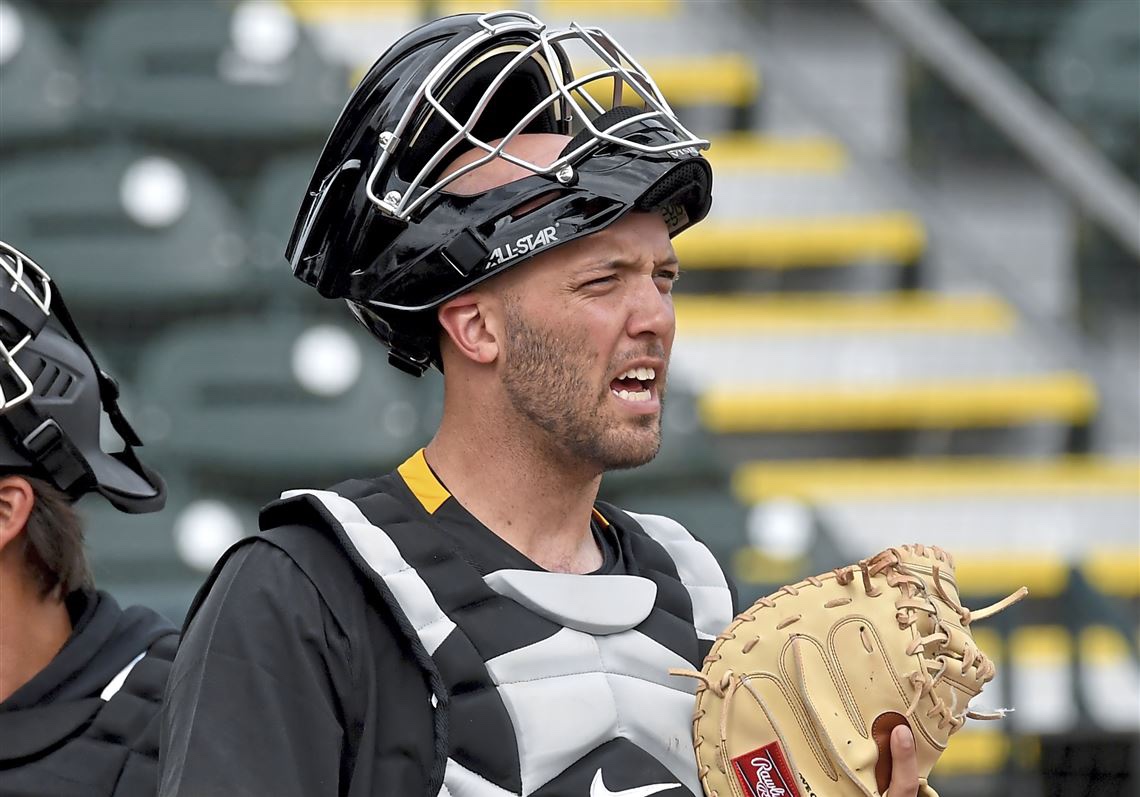
The question as to whether or not Jacob Stallings is the answer at the catching position has been asked by Pittsburgh Pirates fans, bloggers, writers and media members on a regular basis for almost a year now; ever since Elias Diaz was non-tendered at the December 2nd deadline this past off-season. At the time this left Stallings as the only catcher left on the 40-man roster. This immediately led to calls for the Pirates to sign a free agent catcher to be the stopgap until the future backstop could be developed, traded for or signed. Names like Robinson Chirinos, Jason Castro, Austin Romine, Russell Martin and Martin Maldonado were discussed as possible options to fill this role, if even for a season.

As we are all fully aware now General Manager Ben Cherington did not choose any of these options, instead selecting the alternate route of a somewhat open competition between Luke Maile, John Ryan Murphy and to a lesser degree, Andrew Susac as they entered Spring Training. Prior to the restart of the season it appeared as if Maile had won the job, however, he was ultimately supplanted by Murphy having been placed on the IL with a broken finger.

In his absence, the defense first journeyman catcher’s work at the plate lead to a dismal .172 AVG, with a .433 OPS in 58 at bats. Behind the dish he was a serviceable back up to Stallings. Across 23 games and 159.1 innings he earned a 1 DRS and a .8 FRM. In spite of this Murphy now finds himself as a potential non-tender candidate in the off-season.

As for the Pirates Team MVP, Stallings slashed .248/.326/.376 with 3 homers. Although, it was really his work behind the plate that made him stand out. He finished the season with 7 DRS and a 2.3 FRM, which was good enough for 5th place in overall defensive fWAR at 6.3. Throughout the shortened season, just as he had the year before, Stallings remained a favorite of the Pittsburgh pitching staff; a point was driven home by Steven Brault, who when questioned, told the media he skipped the scouting report in his complete game, two hit, eight strikeout performance against the Cardinals. In the same postgame session he was quoted as saying, “We decided before the game that I wasn’t going to shake. I wasn’t going to think. I was just going to be a freaking throwing machine, so it worked out.”

Stallings has also started to receive some accolades on the national level by being nominated for a 2020 Gold Glove; an honor that, if he wins, would put him in a select group with former Pirates backstops Tony Pena and Mike LaValliere.

So, after all this why hasn’t the universal narrative changed? Why are there still some people clamoring for that veteran stopgap?

In my honest opinion there a few reasons as to how these doubts continue to exist within the Pirates faithful and beyond at times. First is the offense production or lack thereof, which is a fair criticism to a degree; simply a little overblown. While a wRC+ of 93 is not ideal, it is only slightly below average. Sure it’s not the 125 of a JT Realmuto, 117 of a Yasmini Grandal or even 109 of a Wilson Contreras, but it was actually an improvement over the 82 he posted the year before. He is also pretty reliable in the clutch; slashing .276/.436/.379 with runners in scoring position and adding 13 RBIs along the way. These numbers got even better as the number of outs piled up, if you want to check it out.

Next would be the downplay of defensive metrics and their importance to a player’s overall value, especially as pertains to framing or as it is called by many, “stealing strikes”. Sure there are a lot of other skills; such as blocking, regular fielding and stolen base prevention. However, they rarely receive the same amount of disapproval from the naysayers; most of which should actually fall on the umpires for the reliability of their calls, if you are going to blame anyone. Nevertheless, until the rules change and/or Robo-Umps become a reality, this is still a very useful tool in measuring a catcher’s worth.

Finally there is the overwhelming fact that, as it stands right now, there is no clear successor to the position in the system. Having addressed this issue many times, and at great length on occasion, even I have become moderately optimistic on this front; mostly due to the injection of youth into the system. 19 year-old Geovanny Planchart, who is currently participating in the Instructional League, slashed .368/.433/.406 in 32 games and 106 at bats in 2019 for the DSL Pirates2. 2019 12th Round Draft Pick Kyle Wilkie from Clemson University is also there. Wilkie was one of the Tigers best hitters as their everyday catcher in 2018 and 2019, ending his career as a. 307 hitter with a .431 slugging percentage and .400 on-base percentage. So is 2020 UDFA Joe Jimenez from Chapman University. Jimenez was not only the battery mate of Pirates 3rd Round Pick Nick Garcia, he also batted .325 with 4 homers in his final 61 games. Are these guys as highly touted as an Adley Rutschman? Of course not. Could they be a part of the future? I am not going to rule that out just yet.

With all that being said, I realized I still hadn’t officially addressed the original question of whether or not Stallings is the answer. Simply put, for right now he is; and if he isn’t a long term one, he might just be part of the eventual equation. Currently Stallings is set to enter his 1st Year of Arbitration; estimated to make between $1 and $1.4 million in 2021. After this he has 3 more arbitration years before he reaches free agency in 2025, so there is no real rush in making any decisions. The Pirates will obviously have to at some point, I just don’t see as an immediate need and probably near the bottom of concerns that I have moving through the current off-season and possibly the next.

The Case of Chris Archer vs the Pittsburgh Pirates

One of the biggest decisions this off-season is really what to do with Chris Archer. If they keep him it affects everything from who they non-tender to who winds up in the rotation. So I thought, let’s look at this like a court proceeding and see if you the jury can make a decision based on all the facts. For this exercise we’ll call buying him out the prosecution and picking up his option the defense. I’ll give you my thoughts at the end but try to be an impartial juror and let me know how you’d rule on the case.

The Defense of Chris Archer

Chris Archer is a good citizen and if you were to head out to the open market and try to pick up a free agent pitcher like him, 11 Million is right in line with what you’d have to spend, well, minus the years you’d surely have to commit to. Archer isn’t guilty of making the trade that brought him to town but his performance has been viewed in the light of what his counterparts have done since the move was made.

The TOS surgery is risky and that can’t be denied but the Pirates have been part of the rehab from the start and should have a very good idea of how he’s progressed. If you’re that worried about this recovery, why are so many excited to see Nick Burdi pitch in 2021?

If it works out, the Pirates can always trade Archer at the deadline rather than let him walk for nothing in return. After all, the Pirates gave up quite a bit to get him on this roster, it would be a shame to come out of that with nothing to show for it. Wouldn’t it be nice to 5 years from now say yeah we lost Meadows, Glasnow and Baz but that all turned into this guy, or these guys?

Heading into 2020 the Pirates had Archer penciled in as the opening day starter, its hard to believe a year later he is disposable.

In closing, you may think this injury makes the decision easy, but what if the injury itself was a big reason for the decline in his game to begin with? Isn’t it worth a shot for a club that has plenty of room in the budget to pick up this option?

The Prosecution of Chris Archer

You’ve heard the defense talk an awful lot about this injury and that surely is part of the decision making in this case but the reality is, Ben Cherington is here because Chris Archer is. If that trade was never made perhaps Neal Huntington would have kept his position. It’s not like Bob Nutting was going to just wake up one day with night sweats that his farm system wasn’t producing talent.

That said, the injury can’t be overlooked. Recovery from this procedure is in many ways more of a crap shoot than Tommy John. The comparison to Nick Burdi isn’t fair, we’re talking about the difference between 11 Million dollars and a little over 500 thousand. Not to mention when healthy Burdi looks like an unhittable back of the bullpen pitcher where Archer has looked like a mistake from about his second start in Pittsburgh.

It is not the responsibility of this administration to help the past make something out of this terrible move. That’s a losing battle and by even deciding to try it would serve as nothing more than an opportunity to fail to impress. The Pirates will never get anything close to what they gave away for Archer and to pretend otherwise would make this group look just as incompetent. Especially when getting out of the situation is only 250 thousand dollars. That’s a buyout that really makes even entertaining picking up the option itself a dereliction of duty.

He was in decline before this move was ever made and plain and simple, the previous team bought a name.

In closing, this management team would have never made this deal in the first place and the sooner we get away from this player, the sooner the memories and visions of missing out on what was given away start to fade a bit.

My Verdict

I can see the logic in picking up the option, after all, it’s not my money. But with the other decisions the Pirates have to make already with non-tenders or potential DFA’s it’s hard for me to think this is a risk worth taking.

Even if Archer comes out and puts together a Cy Young type season (not likely) this team is still not where it needs to be and from a trust building standpoint, how would it look if he was on pace for a season like that and Cherington did the responsible thing and traded him. Sure there would be many who understood and supported it, but to casual fans it would look like little more than another example of this team trading away players that can help.

If I’m Ben Cherington, I walk away from this. I cut ties and move on in the cleanest way possible.

I buy out Chris Archer.

MiLB Clubs Scramble to Remain Part of MLB Development Pipeline

After battling a movement they had little chance to stop, MiLB teams have had to instead find new ways to continue to be involved, and the prospect development pipeline or PDP, seems to be the answer.

The PDP is a joint venture between MLB and USA Baseball intended to develop and identify armature players in the United States along with providing a pathway. The goal is to provide a place for prospects to play and develop under the watchful eye of MLB and USA Baseball beyond collegiate or independent league structures.

When MLB announced it’s plans to eliminate nearly 40 teams from the low level MiLB rung of the development ladder, many worried about the effect on small towns that have minor league baseball at the very core of their identity. On top of the concern that young ball players very much so need the ‘introduction to baseball’ that low A tends to provide.

The historic Appalachian League will be the test pilot for what will essentially be a Collegiate Summer League, consisting of 10 teams playing a 54 game schedule. Teams will be selected from rising college freshmen and sophomores and the teams will no longer be affiliated directly to MLB clubs. So next time you see a score from Bristol, it won’t be the Bristol Pirates, but the Bristol Appalachian League Team.

The Appy as the league has come to be called is deeply entrenched in baseball’s history. Founded in 1911, the Appy has been part of the path to the Bigs for most of the time there has been a landing spot to aspire to. Keeping baseball in these communities helps to smooth over one of the biggest concerns but it still leaves open questions about whether the league might be skipping an important step in the development process.

A few months back Craig and I sat down to talk with Eric Minshall on the pitching side and Scott Seabol from the hitting side. They both had some pretty strong opinions about MiLB contraction. Ranging from player readiness to even the very human side of understanding the pull to provide for family that comes with most young international prospects. Both men have extensive experience in the Appy and felt of all the leagues that could be up for cuts, this one made little sense as the communities were largely prepared to improve ball parks and the travel time within the league is minimal.

At this level, players tend to be extremely raw and extra time is taken with youngsters to find their strengths and weaknesses. It’s important to remember by the time you sign a pro contract, you’ve probably spent almost every day of your life being the best player on your team. That comes with confidence, surely, but it also can create mental hurdles for youngsters to get past. Skipping past this level will jam those lessons into the next part of the progression. It won’t eliminate the need for learning on the job, but it could take time and patience off the table a bit more and facing more sharpened competition won’t help everyone equally.

As Scott said in the podcast, sometimes in the lower levels, baseball is at least third on the list of what the players need educated on. Eating right, staying in touch with family and managing money for some who have seen it for the first time in their lives always have to be focused on. That’s the kind of thing that might be sacrificed at the alter of MiLB contraction. They’ll still have to learn them, but now they’ll be dropped into an environment where baseball is typically number 1 on the list.

Eric at the time mentioned his main concern was the potential of essentially jumping a level and a half. He went so far as to compare it to malpractice to potentially push players from the Gulf Coast League to Low A or even High A before guys are ready.

To be blunt, this conversation took place nearly five months ago and I always like to give people an opportunity to update their feelings and opinions. Hell, we didn’t even know we’d see MLB play baseball this year when we talked so in that spirit I gave Eric a call. He’s been continuing to work at the Throwing Club through the entire shutdown just in case you were wondering about how plugged in he remains.

Well, as with most people who have integrity, Eric stood by much of what he said and followed up with “There are a lot of things I personally don’t believe were thought through”.

We talked about how this might change the process of developing talent. For instance, as we just talked about last week, the Pirates just signed 49 international prospects. And Eric told me about an experience from 2019 in which many of the DSL (Dominican Summer League) players were up here training because of the renovations taking place to their facility. He recalls being told by their coaches to bear with them as they were still being developed. The tools were visible and exciting, but put them into game action and they were exposed quickly.

That’s why baseball needs that Low-A option.

Without it, more players could be drafted out of college rather than high school, and they may have to look at some way to alter the rules in the DSL to keep some of those guys learning there a bit longer.

What baseball has put forward, primarily travel time and infrastructure are rather weak to be honest. In the Appy, the most travel time at any one point is 3 hours and most road trips are strung together. Almost every member town was open to improving the infrastructure but MLB never told them what moves in particular needed to be made.

Part of me thinks when reasons fail to, well, reasonably explain the motives, there must be something else. That something else in my mind is to bring in less players in the first place and while I understand that on the surface, I also think this will ultimately lead to more Independent League discoveries and potentially talent from smaller schools missing the opportunity all together.

Again, I’m happy they found a way to keep baseball in these communities and hopefully it will take off just like the Cape Cod league, but it’s a different brand of baseball and depending on how they select the teams, selling it as the stars of the future might be a stretch.

Fighting this is over, but understanding it is just beginning.

Through The Prospect Porthole: A Year Without Minor League Baseball

This past weekend I had the privilege of speaking with several members of the Pittsburgh Pirates 2020 Draft and UDFA Class, all of whom are currently participating in the Instructional League at the Pirates Spring Training Facilitates in Bradenton, Florida. As each interview progressed I always found myself coming around to their individual draft experience and ultimately what they did between June and the beginning of instructs. Any other year we would have spent time talking about games being played for the West Virginia Black Bears, GCL Pirates and possibly the Bristol Pirates as their first experiences of professional baseball. Instead our conversations drifted to private workouts, college courses, batting cages, bullpen sessions and searching for battery mates or live at bats whenever it was possible, which is clearly not the way any of them envisioned beginning their careers. However, they were not alone in their time of wanting, waiting and ultimately improvising within the Pirates Organization and Minor League Baseball as a whole.

As I discussed in a previous article, there were a limited number of prospects from each club that were invited to be part of their team’s taxi squad and a select group that was eligible and available for instructs. Everyone one else has been, or continues to be, on their own as they try to navigate their own personal baseball journeys. These sets of circumstances lead me to have many more questions than answers as we move toward the 2020 off-season and eventually the start of the 2021 baseball season; especially for a team like the Pirates who are at the beginning of a build.

To what degree has player development been stunted, both individually and as a whole? General Manager Ben Cherington, Manager Derek Shelton and the rest of the coaching/development staff got very little time in Spring Training to begin instituting the new organizational philosophy, especially as it pertains to pitching, before everything was shutdown.

How will the lack of a Minor League season affect the trade market? I asked a very similar question prior to the August 31st trade deadline. It is difficult to trade for a prospect based on performance at the alternate site and/or in Instructional League. The same way it is nearly impossible to make changes to the top prospects list unless a player (aka Ke’Bryan Hayes) was able to debut in the 2020 truncated season, but not play enough to lose eligibility.

What level will players start off at after an entire year without organized baseball? If a player was scheduled to start the year in Bristol, West Virginia, Greensboro, Bradenton, Altoona, etc. this year, where do they begin 2021? I realize that these decisions will be made on a case by case basis, however, you also have to take into account that some of these Minor League Ball Clubs will more than likely will not exist next season.

Obviously there will be more questions that need to be answered and concerns to be addressed as the Pirates and the other 29 Major League Organizations move into 2021 and beyond. Unfortunately many of them may not present themselves right away and may appear without warning, much like they did in 2020. So be prepared.

Be on the lookout for full Pirates Prospect interviews during upcoming episodes of Bucs In The Basement .

Rays and Dodgers Set to Face Off in World Series

Before the season finally opened up everyone seemed to think the 60 game schedule would swing the door wide open for someone to sneak in to the series. Anything can happen and without the marathon season we all recognize as normal perhaps a team’s depth wouldn’t get tested quite so much.

As the season played out we saw it was anything but. Depth was tested possibly more than ever before and as usual the cream rose to the top. This will be painted as David vs Goliath but in reality, it’s a matchup of the two very best franchises in baseball when it comes to developing talent.

The Dodgers certainly spend more to retain and augment what they develop but it can’t be discounted that both of these clubs have internally developed their core components.

Another thing we’ll hear is how bad it would be for the prospect of MLB ever adopting a salary cap if the lowly Rays were to win. I get that, in fact people still reference the Royals team that won the series in 2015. If the Rays pull this off, the narrative will shift to talking about how very fair and balanced MLB is what with two smaller market clubs having won the series in a span of 5 years.

I see another side of the coin though in this discussion. The teams that do spend the most keep falling short or at the very least have these low spending “farm teams for the league” rosters keeping pace.

The structure of the league allows the rich to spend whatever they like, sure they have to pay a penalty if they go too far but realistically there is nothing to stop them from spending up to whatever they’d like. Those clubs largely support the league with revenue sharing and at some point I have to believe they’re going to get sick of disproportionately contributing to the overall health of the league, yet not benefiting with championships at nearly the same rate.

Don’t get me wrong, if the league did institute a cap, some teams still wouldn’t get the job done. Look at the NFL, the Jets, Washington, Miami, a cap doesn’t guarantee your club will ever reach the promised land, you still have to make the right decisions, but at least the Jets can’t say they have less chance because the Bears payroll is so much higher.

The bottom line is, root for who you like but neither outcome is a sure fire message to the league. The Rays are masters at knowing when to move a player and ensuring they get pieces back who contribute. Not everyone will be a star, not everyone will be a five-tool phenom, in fact most will have warts that their previous home couldn’t see past, but the Rays put people in position to do what they do best.

The Dodgers have a ton of money, and that get’s them bites at the apple teams with less resources wouldn’t have. They can develop a Cody Bellinger and while he’s pounding balls over the wall in his rookie season, the thought of having to figure out when to move him for the best return doesn’t come up. Trust that the Rays are having a much different thought process take place as they watch Arozarena or Meadows.

In many ways, the fan experience is the real difference. It’s how you feel when watching your club climb the mountain and maybe more importantly how likely you see it that they stay there.

The Dodgers have been the pre-season favorite for the best part of five years now, and while you may believe they’ve had one or two shots stolen from them the fact remains they haven’t gotten the job done. The Rays have ultimately fallen short every season prior, and now that they’ve made the series it’s hard to imagine they don’t sense the rarity of the accomplishment.

I’m looking forward to the series and not to see ex-Pirates or players they could have traded for (at least in our own minds), I’m genuinely intrigued by the matchup. I’m also thrilled this season is nearing it’s end, because while I appreciate they played baseball this year, I also can’t wait to get back to normal baseball.

We have an entire crop of draft picks that haven’t played one game professionally as of yet and rosters full of players locked in where they left off. Baseball needs to return to normal order and while I assign no asterisk to the eventual champion this season, I also want to see the depth that baseball usually provides.

2021 will be interesting if only because of it’s normalcy, but the weight of the CBA renegotiations will be present. Every comment from either side will be parsed and the opportunity to level the playing field will either be ignored once again or painfully brought to bear.

Let’s watch.