Top O’The Metric To Yinz: Putting Balls In Play

Just put the ball in play and anything can happen. It’s a fairly simplistic statement, but sometimes those are the ones with the most truth behind them. If you walk, you only get first base. If you strike out, you are either yelling at the umpire for a missed call or yelling at yourself; either way you are walking back to the dugout. Making contact and putting the ball in between or on the chalk has endless possibilities; a bobbled grounder, a misread fly ball, a little sun in the eyes, a strange bounce of the wall or the infield grass, a wild throw, a foot pulled off the bag, two fielders colliding or a player robbing you with a diving catch, along with a myriad of other outcomes.

In modern analytics these and every other potential factor are taken into account in order to come up with the stat that is referred to as a batters BABIP (Batting Average on Balls In Play). The three most common factors that I have seen listed that have an influence on BABIP are: 1) Defense 2) Luck 3) Talent Level. Batting against a a team of elite defenders could have an affect on your ability to get a hit in a negative way, just as hitting against fielders who are below average could cause the opposite to be true. Luck is exactly what it sounds like. It’s that bloop single that falls in or a dribbler bouncing just out of the reach of a shortstop. Neither of these balls were hit very well and in many other circumstances might not have resulted in a hit. Regularly making good contact is a sign of a player with a higher talent level and one that has a better chance of getting a hit on a more consistent basis.

BABIP, however is a stat that should be judged with caution as it can deviate in one direction or another away from league of around .300 to an extreme degree. A BABIP of over .380 is seen as unsustainable and anything around .230 is very uncommon for any major league hitter. Within these polar opposites is embedded a certain degree of luck or misfortune. So when we look at each player’s BABIP, the higher ones do not always equal or predict continued success and the same goes for the lower ones as far as failure. What you are looking for is stability in the numbers in order to use them to predict whether or not a batter is due for a regression (aka “slump”) or will eventually start producing back to their norm by getting on a hot streak.

This past season in Major League Baseball the top 3 non-Pirates pertaining to BABIP were Yoan Moncada (.406) and Tim Anderson (.399) of the White Sox and Trevor Story (.361) of the Rockies. Each of these players had career or near career years in most of the major statistical categories to go along with an inflated BABIP. On the flip side of the equation were Jurickson Profar (.218) of the A’s, Daniel Vogelbach (.232) of the Mariners and Albert Pujols (.238) of the LA Angels. Each of these players had struggles in almost every area except for power, to be honest I don’t see any of these teams being to concerned about their BABIP as they have much more pressing issues to worry about.

For the Pirates this past season BABIP was a pretty regular topic amongst fans as they were curious if certain hitters would be able to maintain their unexpected strong performances or if a particular pitcher’s numbers were the result of a string of bad luck. There were many differing opinions concerning this topic; some were optimistic, while others pointed toward regression and less than promising projections for the future. Unfortunately for now we can only look at last years numbers as we wait for impending start of baseball.

Top 3 Pirates

1) Bryan Reynolds (.387)

The NL Rookie of The Year, who was in the running for the batting title for what seemed like the majority of the season had a lot of questions surrounding his out of the blue first season success. Many of the questions were surrounding his ability to maintain his the level of performance Pirates fans has come to expect from him. People began to look at his BABIP and wondered if there was some luck behind such a elevated number, which was actually the third highest in all of Major League Baseball. If you look at his minor league career, he had always had an elevated BABIP, so it is possible that this a pattern for him. However, the skeptics in the group want to see at least one more season facing MLB caliber pitching before they will be convinced.

2) Colin Moran (.341)

I am not going to lie, I was pretty surprised when I saw Moran’s name pop up on this list; mostly because his defensive numbers often overshadow his offensive performance. Based on this number as well as his one from the previous year (.316) he is actually an above average hitter with the possibility of increasing upon his consistent .277 batting average. This ultimately might not make up for his poor defense, but if he is able to make any adjustments in that area he would become a clear every day player in the majors.

3) Kevin Newman (.333)

Another unexpected rookie season was delivered by Newman who ended up with the second best batting average on the team. Pirates fans who are questioning his ability point out the low exit velocity (84.7 mph), Barrel Percentage (2.1%) and Hard Hit Percentage (24.4%) as reasons for a potential regression; which is one of the many factors that can affect BABIP. Unfortunately with a limited track record and a delay on the current season these questions will have to let unanswered for now.

Bottom 3 Pirates

1) Cole Tucker (.276)

For Tucker this is actually a little bit of a positive because it shows that he can more than likely improve upon his .211 Batting Average. However, at this rate he would still be a below average hitter in MLB. As with Newman there is a limited track record that only more big league at bats can sort out.

2) Jose Osuna (.285)

Many Pirates fans have pointed to Osuna as a possible answer at 3rd Base or in Right Field. He does have above average power at times, which could potentially overshadow a lack of ability in other areas. For him this was a limited sample size due to injury and is actually the outlier from his previous two seasons, so once again more information/playing time will be needed to make a determination as to exactly what type of player Osuna is.

3) Josh Bell (.288)

This number from Bell actually caused me to pause a little bit as I was looking up countless statistics of other players. A slightly below average BABIP does not automatically mean that Bell cannot be a consistently good hitter for the Pirates, but it can make it more difficult. He will need to excel in other statistical categories in order to make up for his below average performance in this one. And for those of you are wondering this is actually the norm for Bell as it falls right in the middle of his previous years BABIPs, with only 2018 in the above average range at .305.

BABIP is an extremely finicky statistic that should be used with caution. However, when assessed correctly it can be fairly accurate in predicting outliers, as well as upcoming “slumps” and hot streaks. Unfortunately for now it can only be relied upon on a more limited basis as no actual baseball is being played at the moment. Hopefully that changes sooner rather than later.

Pittsburgh Pirates Sunday Services

Turn in your scripture if you will to read along with me, we can’t go to church, but we can still study Pirates Scripture and fellowship together.

Roberto’s Letter to the Braves 5-3 – Knowest thou not that Roberto has power? Surely, he showeth the best in thine game this day.

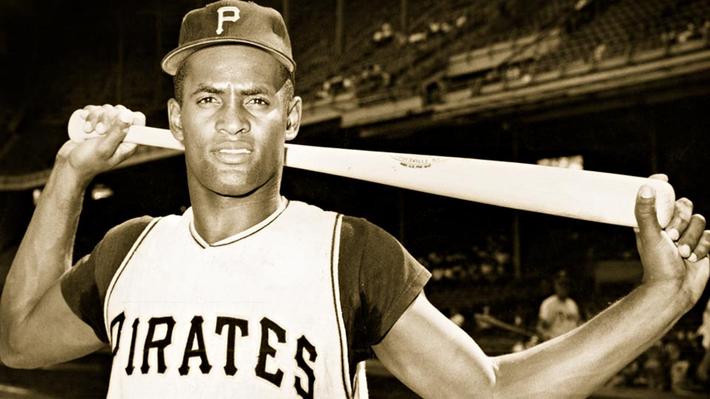
Brothers and Sisters, on May 3rd, 1955, Rookie Right Fielder Roberto Clemente stepped to the plate in the first inning against the Great Warren Spahn and belted his second career homerun against the Milwaukee Braves to lead off the game.

The great one was just beginning his career and showed the league he was here to stay by delivering a blow to one of the league’s best. Having just made his first start on April 17th against the Brooklyn Dodgers, Clemente was a relative unknown but was at the beginning of his pioneering career that would help deliver two championships to his new home and afford him the ability to help his original home at the same time.

Although this club would go 60-94, pieces including Clemente were starting to take shape. And this game in particular was an opportunity to have those who would become arguably the two best Right Fielders in the history of the game square off in the form of Clemente and Henry Aaron. If you had to put money on which one would hit a homerun, it wouldn’t have been Roberto.

Sports have played an important role in society throughout the history of our nation. Possibly none more so than racial and ethnic equality. Here were two men of color, shining bright in a game that only 8 years prior would not accept them, or at the very least let them play on the same field with Warren Spahn. Today, they were book ending him, one playing with him and the other facing him.

My friends, change can come and although it moves more slowly than any of us would like, our country has a long history of eventually getting it right. Much like Roberto didn’t stop after his second homerun and pretend he’d arrived; we too must never feel our journey is over. We must always strive to be better, to get better, to indeed do better.

These men wanted exactly one thing, a chance. When given their wish, they capitalized and became immortals in the lexicon of our history, transcending sport and becoming icons of their races as well. The pride of having Clemente in our franchise history should swell inside each and every one of you. A remarkable human being, who happened to be one of the very best to ever play the game of baseball, and he did it here, in our city.

Have a blessed day everyone and remember to try to see the positive side of everything we have together as a fan base.

5 Thoughts at Five

Happy Saturday! Beautiful day out there, do what you can to get up and enjoy. Here are some things to mull over while you’re out.

1. I think I may miss Stadium Nachos the most out of all the food at PNC. What do you miss?

2. Is it only me that feels like Colin Moran is going to leave Pittsburgh and blossom in his new home one day?

3. I feel like many Pirates fans are like an old Columbo flick. Just like Peter Falk portrayed, they know from the beginning who’s guilty (Nutting) and by god he’ll be guilty by the end.

4. Above all through this, we’ve been told to trust the science and listen to the doctors. Most of us have, so, why suddenly do we not trust the data here in Allegheny County?

5. I heard Derek Holland on The Fan with Dan Zangrilli, it was a great conversation and he paints a very nice picture of a tight clubhouse. I understand the sentiment that some of the players don’t want to be away from their families, but they must understand sales people feel that way too. We all must do our work, and what is required of us at any given time to do it. All of us. Baseball made many people rich, time to understand this is a job at times too.

Thoughts? Share them with us!

From The Crows Nest: The Cincinnati Reds Farm System

In the first installment of this series I took a look at the Chicago Cubs Farm System because I felt like it was one that has followed a similar path to the Pittsburgh Pirates, at least over the last 10 years or so; on top for a while, falling of at times and attempting to regroup at the moment. The Cincinnati Reds Farm System on the other hand has been all over the place with no real goal or motivation in mind, which is not to say that they haven’t had a strong minor league structure on occasion; I just have no idea where their focus and/or planning is at any given moment in time.

For the past two off-seasons the Cincinnati Reds have taken the unconventional route toward building a competitor, especially considering they are small market team and organizations of a similar ilk rarely operate in this manner or fashion. They have decided to spend on free agents, a tactic that did not pay off last season and unfortunately may not even get the chance to get off the ground with the Major League Baseball season in flux due to unforeseen circumstances. During the past trade deadline they chose to be buyers instead of sellers; throwing conventional wisdom to the wind to the detriment of their farm system.

The Cincinnati Reds lost two of their Top 30 Prospects in the Trevor Bauer trade this past July. (Right): OF-Taylor Trammel. (Left): LHP-Scott Moss.

Currently the Reds have only two prospects in the MLB Pipeline Top 100. They would still have three, but Taylor Trammel is donning an Amarillo Sod Poodles in the San Diego Padres organization thanks to the aforementioned trade. Due to this and other transactions, including promotions, the Reds Farm System sits at #24, right behind the Chicago Cubs. As it was with the Cubs there is still some high end talent within the minors, it is just that both of these systems as a whole are not as strong as they could be or once were. As the season progresses or should I say if the season progresses, others could join the ranks of the top 100; including older brother of Pirates #8 Prospect Sammy Siani, Michael Siani, who currently sits at #6 on the Reds Top 30 List. As I did with the Cubs system I will only be focusing on the Reds Top 5 players according to MLB Pipeline to keep it a regular column and not a complete novel.

1) Nick Lodolo-LHP (MLB Pipeline #48)

Originally drafted by the Pittsburgh Pirates in the first round of the 2016 MLB June Amateur Draft out of Damien High School in California, the young left handed hurler was the first pitcher off the boards to the Cincinnati Reds at #7, out of TCU. Lodolo had limited action in his first professional season, appearing in only 18.1 innings across to levels. However, he was extremely impressive in this short time striking out 30 and not walking a single batter, all while posting an ERA of 2.45 and a WHIP of .982; ending the year in Dayton with Cincinnati Low-A Affiliate, the Dragons. Lodolo is an extremely polished pitcher, with three above average pitches in his arsenal; a low 90’s fastball (55), a low 80’s slider (55) and a changeup with deceptive arm action (55). Look for him to quickly rise through the levels of the Reds system when baseball returns.

2) Hunter Greene-RHP (MLB Pipeline #53)

Picked by the Reds in the First Round (#2 Overall) of the 2017 MLB June Amateur Draft out of Norte Dame High School in California, Greene has about as high of a ceiling as any pitching prospect on the Top 100. After a hectic fist season, more of a leveled out second season and an inspiring performance at the 2018 MLB Futures Game Greene was shut down for the remainder of the 2018 season with a elbow strain, ultimately resulting in Tommy John Surgery prior to the 2019 season beginning. When healthy Greene has one of the best fastballs (80 Grade) in the minors, reaching 97 to 102 mph with ease. Throw in a slider (55) that has flashes of being a lights out second pitch and a change up (50) and Greene’s potential is still that of a front line starter of the future.

3) Tyler Stephenson-C

After being drafted in the First Round (11th Overall) of the 2015 MLB June Amateur Draft out of Kennesaw Mountain High School in Georgia, Stephenson had an unfortunate beginning to his professional career with injuries during his first two seasons. Since that time he has worked very hard to get things back on track, having the most successful and well rounded year this past season with the Chattanooga Lookouts (Cincinnati’s Double A Affiliate), followed by a solid showing in the Arizona Fall League. In 89 games he slashed .285/.372/.410 with 6 homers. His defense also steady improved as it pertained to pitch framing and arm strength, giving him the ceiling of an every catcher in MLB for years to come. I also see it as a vote of confidence in Stephenson’s abilities that the Reds maintained a group of solid veteran catchers rather than overpaying for a potentially more long term solution behind the plate.

4) Jonathan India-3B

After a breakout season in 2018 at the University of Florida, India was selected by the Reds at #5 overall in the First Round of the 2018 June Amateur Draft. His first full season in professional baseball in 2019 he battled a nagging wrist injury, which obviously had an affect on his overall offensive production. In spite of this he was able to show off some of his power, posting a .402 Slugging Percentage and smashing 11 homers. His approach at the plate also improved as the season progressed; including a promotion to the AA Chattanooga Lookouts from the High A/Advanced Daytona Tortugas. His BB% increased from 10.1% to 15.2% and his K% decreased from 22.9% to 17.9%. After a full offseason to recuperate, the Reds are hopeful that India is back on track and can build upon the positive strides he took through adversity during 2019.

5) Jose Garcia-SS

As a Cuban defector, the Reds signed Garcia for $5 million at the end of the 2016-2017 signing period on June 10, 2017 and potentially rushed him into action at the start of the 2018 season; assigning him to the Low A Dayton Dragons to begin the year. Garcia struggled his way through his time there, slashing .245/.290/.344 with 6 homers and 32 extra base hits, while striking out 21.7% of the time and walking only 3.7%. Luckily for the Reds his defensive capabilities of a 55 grade fielder and a 60 grade arm were not affected by this and he evidently was able to make some offensive adjustments going into the 2019 season. Last year with the High A/Advanced Daytona Tortugas Garcia batted .280 with 8 homers and 46 extra base hits in 21 less games and 78 less at bats than the previous year. His wRC+ also increased dramatically, going from 81 to 131. Prior to the situation this year, the now 22 year old Cuban was estimated to arrive at Great American Ballpark in 2021, however it is clear that some adjustments may need to be made to this timetable.

With the Cincinnati Reds hoping that they put themselves in a position to compete in the upcoming years, this unexpected work stoppage has the potential to be is fairly devastating. Sacrificing their Farm System and financial future for more immediate results is not a stance that I supported from the beginning and could easily come back to bite them as they move forward. For their sake I hope there is at least some baseball played this season because one year of wasted time could affect them more than a lot of other organizations and as of right now, looking at their Top Prospects, it does not seem like there is much of a backup plan.

Top Ten – Craziest Things I’ve seen in Baseball

Baseball creates drama, and the unexpected events that crop up are the ones that really stick with you. Here are my top ten insane things I’ve seen, what did I miss?

  1. Randy Johnson kills a bird.

2. Jose Canseco has some trouble.

3. Pirates 2014 Triple Play

4. A bunt double

5. Ken Griffey Jr. robs Juan Gonzalez

6. Maldanado Literally hits the cover off the ball

7. Josh Donaldson has a weak web

8. Tony Womack’s inside the park grand slam

9. Clemente steams the ivy off the wall at Wrigley

10. Ozzie Smith (one of hundreds)

I know there are more. Hit me with yours!

Friday Focus – Evaluation, The Unseen Casualty

It has been little over five months since Travis Williams and Ben Cherrington were hired as the President and General Manager respectively. The offseason was anything but normal to begin with as the hiring process went late, cutting into the valuable time it takes to make moves and evaluate where the team is.

Toss on top of that, nobody, at least not alive and working today has seen anything like what this season has wrought. Somehow though, these two gentlemen are already failing. Somehow patience has already waned, and its already led to the diagnosis that Bob Nutting has rendered both impotent.

They have made exactly two big moves so far, Hiring Derek Shelton to coach the team, and trading Starling Marte for prospects and International Pool money. We have approximately two weeks of following Shelton as a coach, like actually making lineups (albeit Spring training) and honestly, we were just starting to learn some of his philosophy. We didn’t even get to the point where we see his vision for the opening day lineup.

That’s where we are. Stopped in our tracks, wondering how or if MLB will come back and still no idea what this team will look like when it does.

None of that has stopped many from deciding these are simply the new willing participants in Mr. Nutting’s evil plan to separate idiots from their money. Some folks never saw past Nutting in the first place, it wouldn’t matter who they hired or what moves they made. If the Prates signed Dallas Keuchel to a 3-year deal worth 70 million many would quickly label him nothing more than lipstick on a pig.

This event has cost the world countless in financial losses on top of the actual casualties. Baseball has lost its life’s blood, evaluation. Not only did we lose the ability to evaluate young talent, the progression of players but for the Pirates new management team, they get nothing. They’re powerless to do anything to enhance their perception, incapable of evaluating talent already here, or making moves even if they could. Timelines are off, service time is up in the air, budgets that potentially weren’t even set in stone are now in flux.

There should really be no evaluation of any kind going on toward these men, yet it does. Somehow in the course of having their hands tied along with all their counterparts the narrative that they somehow are failing is prevalent in Pirates Nation.

They haven’t earned our trust, not yet, but surely, they should do, well, something before we deem them failures. It’s not only the management. Colin Moran has somehow become an even worse defender than he was in 2019. Josh Bell has taken a further turn toward inconsistency. Mitch Keller is already lurching toward the bust label, and Bryan Reynolds is firmly locked in a Sophomore slump.

We’ve had no sports for quite some time now and thinking about all these possibilities is natural but thinking about them until they become fact in your mind is unhealthy, both for yourself and the fanbase.
So, what’s the point? Why point this out? Simple. The mantra of this site is pretty straightforward, Fair Pittsburgh Pirates Coverage.

Imagine you are a successful restaurant GM, and you accept a position with a failing restaurant to bring your expertise and turn things around. You start by seeing the inventory management is completely out of whack and the employees by in large were not trained well. You start making changes and anxiously await the new recipes your brand new head chef will implement. Then everything stops.

You at first try to continue as best you can, working on the back end to ensure when you are able to open up, things are in place. You can’t order food though, no wine, employees can’t be trained because they can’t even come to work and worse the ones who do have to learn how to operate in a crippled situation.

Suddenly, after a month of effort you read a restaurant review saying the new restaurant will fail. They have no real reason beyond the fact that the owner you work for didn’t give the previous GM the tools to get the job done and you have dared to not do anything since your hire to correct it. You reach out to tell the reviewer that you have been assured you have the resources you need but spending them at this time is not prudent, you need to get the systems underneath it built, or you’d build on a foundation of sand.

No doubt this is a real situation playing out all across this country. And something very similar is playing out in the Pirates front office.

In order to fail, one must first be afforded the opportunity to make an attempt. Before being called a liar, one must have opportunity to deceive. Make no mistake, the GM in both situations may very well fall on his or her face, perhaps they should be afforded the opportunity to take a few steps first.

Ring That Bell – What Could a Relationship with Scott Boras Change About How the Pirates (and Fans) Do Business?

I’ll jump right in. I’ve advocated for the Pirates extending Josh Bell, well, since I started writing about the Pirates. I’ve also kept firmly in the back of my mind he is a Scott Boras client and had more than likely already played himself out of town.

Here is where I could “report” all about how the Pirates are working with Mr. Boras and building on Ben Cherrington’s existing relationship with him to establish a new way of doing things in Pittsburgh. Instead, I’ll implore you to read what the original reporter wrote on the subject, Jason Mackey did a wonderful job here and deserves credit.

That said, the PG is a pay site now and just in case you’re past your number of free views available, allow me to summarize.

On day four after becoming the GM, Ben called Scott to talk about Josh Bell. Not to negotiate, just to talk, to lay out his plan and learn more about Josh and his story. He was leveraging his existing relationship built during his tenure with Boston. Scott was very complimentary and truly seems to believe they can get something done here if they choose to do so. He also has great respect for Travis Williams and Special Assistant Greg Smith.

Insert necessary safe walls and bet hedging here. Josh Bell is not going to come cheap, but perhaps this allows us to do something we haven’t here in Pittsburgh for some time however, dream.

There is a phenomenon that happens in this town, and I’m sure elsewhere but here for sure. I call it the “I Never Liked That Girl Anyway” plan. We see it all the time if you think about it. Gerrit Cole was never going to sign here so we start listing why we don’t want this absolute can’t miss stud pitcher. “He never had that much success here” “He had an attitude problem” “He didn’t try here, he just wanted out”. We’ve seen it with Starling Marte, “He was lazy and unfocused” “He never lived up to his potential” He was hurt ALL the time” “I never liked him after he got caught doing steroids”

There are elements of truth in there, but reality states, if either of those players would have happily stayed here, you’d be hard pressed to find a fan who’d tell them to hit the bricks.

It didn’t just start in this era; Barry Bonds was a prima donna and had a weak arm. John Smiley wasn’t good enough to be a top end starter in the rotation. Jason Bay peaked in his rookie year and they needed to get something for him. Freddie Sanchez was a judy hitter, this one went so far as to claim his batting title was tainted as if singles don’t count.

This fan base doesn’t, for the most part, do this to be miserable, they do it as a defense mechanism. Just like the girl that turned your invitation to the prom down, suddenly they have flaws where they were perfect leading up to the ask.

The major takeaway here is this, Ben is a different GM, and if he proves he is capable of keeping players like this it will immediately make building a roster easier. Rather than having to bet on near complete turnover of the roster window to window perhaps there is room for some holdovers that truly become a core. Even if he swings and misses on keeping Josh in town, the sentiment here shows a willingness and understanding that these are the types of moves that start to repair the damage done to the fan base over the years and at the same time keep key pieces in place that make the overall product better for longer stretches.

I know, I know, Josh is awful at defense and isn’t consistent and, well that’s it, not even Pittsburgh can pretend he’s a malcontent or doesn’t care. All I’m asking is you allow yourself to be ever so slightly less pessimistic, because its very possible the front office shakeup is truly different. And before you jump back to the fact, I haven’t mentioned Bob Nutting and he’s way too cheap to ever let this happen, here is one quote from Jason’s story as Scott Boras spoke to it. “I think Bob now has a platform of information that’s available to him that will allow him a new constitution for Pittsburgh,” Boras said. “He’s going to have to make major decisions that are based upon advisement, and he’ll have to determine if the information he’s given is reliable and trusted to where he’ll feel differently about it than he has in the past.

“But you have to have your bill of success. Each one of those bills that create the Pittsburgh constitution has to be created by men who have a trusted history. I think [Smith] is a person who has that history. And frankly, I think Ben does as well.”

Yeah, Scott could just be trying to be nice, or he could really believe things are changing here. I guess we’ll find out soon enough, but its good to know the end of arbitration won’t always have to mean parting ways.

The Pirates Top 5 Five Tool Players of All Time

Everyone that reads almost anything I write or listens to my podcast with my buddy Chris, Bucs in The Basement, knows that I am a prospect junkie. Today I am going to step out of my element a little bit, but I am going to take a part of my passion with me. In the prospect world a player is judged by their abilities or potential according to 5 specific tools; 1) Hitting 2) Power 3) Running/Speed 4) Fielding and 5) Throwing/Arm Strength. To be considered a “Five Tool Player” you would need to be assessed as above average to elite in each of these areas; scoring a 55 to 80 on the scouting scale.

In Major League Baseball there are probably 3 to 5 positions players at any given time that are considered Five Tool Players, which would mean that out of almost 400 players there are only a few guys that fit into this category and it could be the same players for years at a time. So taking that into consideration, in the history of the Pittsburgh Pirates, going back to 1882, how many players of this caliber existed within the organization? In the past 138 years there are probably a lot. However, I am going to attempt to narrow it down to just 5. This is an almost impossible challenge, which I am sure not everyone will agree upon, but that is the fun imbedded in a discussion such as this. Without further adieu, here are my top 5 Five Tool Players in Pittsburgh Pirates History.

5) Andrew McCutchen

Hit: A career .291 hitter with the Pirates, McCutchen led the NL in hits with 194 in 2012 and had an average over .314 three years in a row between 2012 and 2014; winning the NL MVP in 2013. Power: A career .480 slugger (.487 with the Pirates) and 7 straight years of 20+ Homers, topping out at 31 in 2012, Cutch also hit 292 Doubles in 9 years. He was a 4 time Silver Slugger Award Winner as well. Run/Speed: The first time I saw McCutchen run the bases at PNC Park it was almost like he was effortlessly floating from home to third. Compiling 20+ Stolen Bases for the first 5 years of his career (187 Total), he always had the green and could have had more of if he took advantage of every opportunity. Field: The active leader in MLB in both errors committed (37) and putouts (2,954) as a centerfielder, he boasts a career .988 fielding percentage. Throw/Arm: The active leader in career outfield assists (63) and in the top 10 in double plays (16) from center, I believe that this was a sometimes overlooked strength in his time with the Pirates.

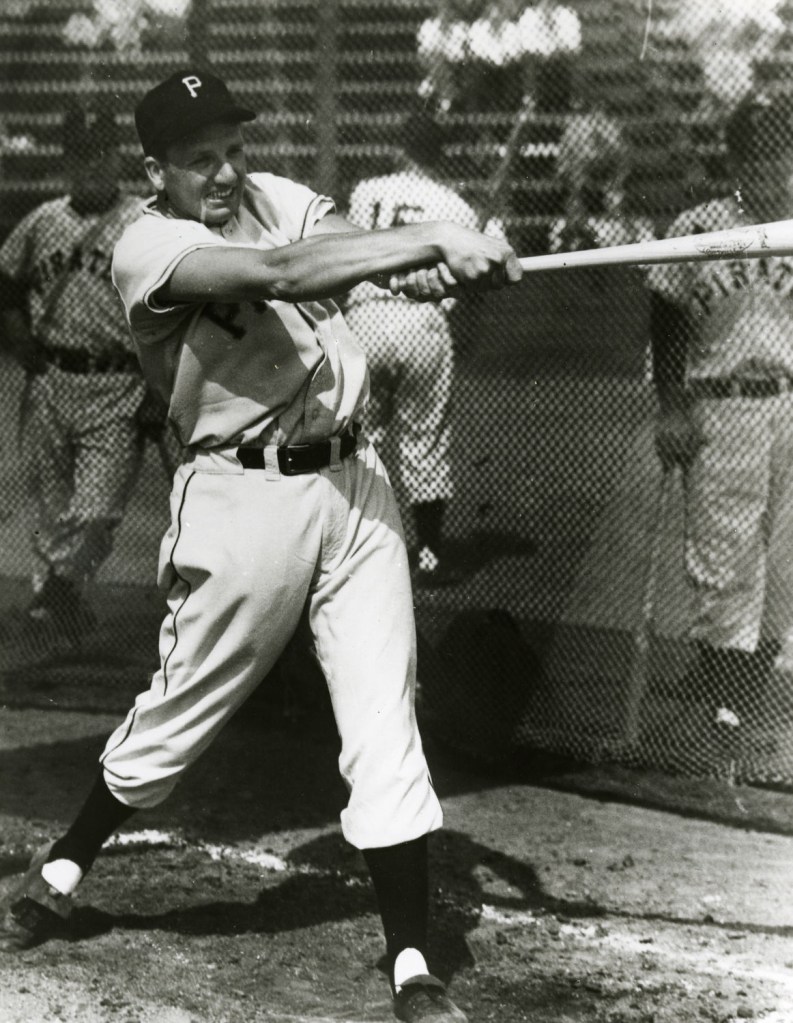
4) Ralph Kiner

Hit: In his 8 years as a Pittsburgh Pirates, Kiner was a .280 hitter, with three years over .300. He led the NL in RBIs (127) in 1949 and was in the top 5 six years in a row between 1946 and 1951. Power: Kiner led the NL in Homers for 7 consecutive years, totaling over 40 five times and over 50 twice. He would hit 301 in his time in a Pirates uniform. Run/Speed: When you hit as many homers as Kiner, you rarely have the opportunity to show off your potential speed. He did have the opportunity/ability to leg out 32 triples and led the NL in range factor/game twice, landing in the top 5 six times as a left fielder. Field: He led the NL twice in putouts as a left fielder and is 30th overall in the history of the game with 2,546. His fielding percentage for the time was one of the best in the NL, as he finished in the top 5 seven years in a row, coming in first in 1948. Throw/Arm: His 73 career assists as a left fielder has him listed as 64th all-time. He also ranked first in the NL in outfield double plays twice in 1949 and 1950.

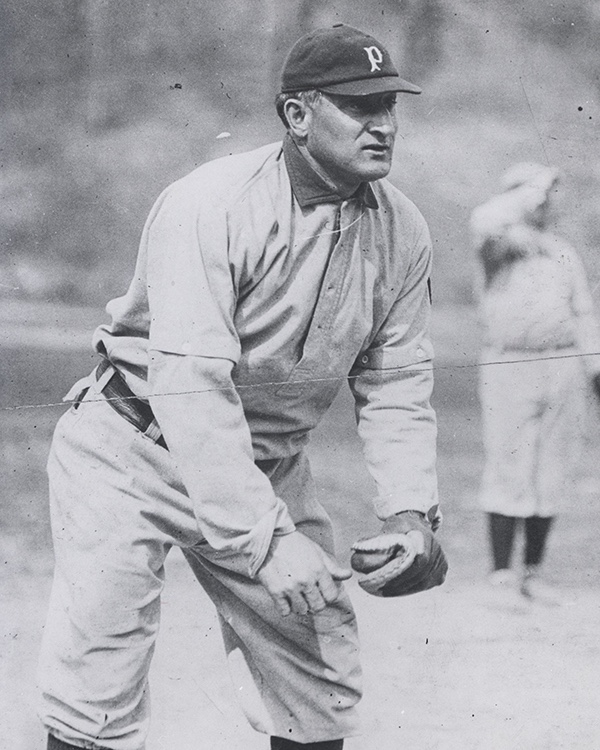
3) Honus Wagner

Hit: A career .328 hitter, Wagner led the NL in batting average a total of 8 times, topping out at .381 in 1900. He is also 8th all-time in hits with 3,420 and led the league in RBIs 4 times. Power: Homers were not really a big part of the game during his time, but doubles sure were. He led the NL in doubles on 7 occasions, producing 30 or more in 14 seasons. He holds a career .467 slugging percentage, leading the NL 6 times. /Run/Speed: Wagner is 10th on the career rankings for stolen bases (723). He led the NL in 5 seasons, having his best year in 1907; swiping 61 bases. Field: One of the best shortstops in the game at the time, he had a career .940 fielding percentage (#1 in the NL 4 years in a row) and was a part of an astonishing 766 double plays. Throw/Arm: 6,041 total assists as a shortstop, which is 23rd on the list. If I threw the ball that many times I am pretty sure my arm would fall off, but Honus’ just kept on getting stronger.

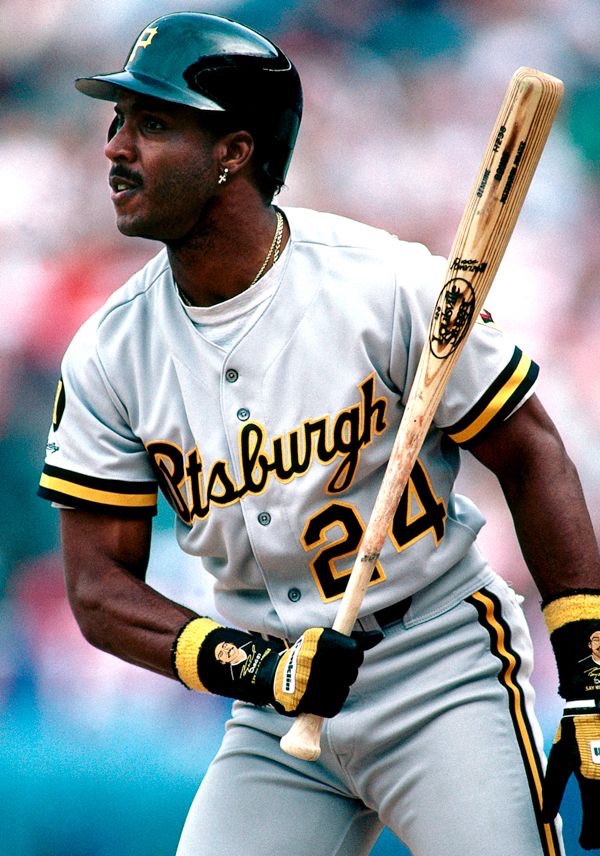
2) Barry Bonds

Hit: After his first 4 years in the league Bonds started to hit his stride in 1990, on his way to becoming one of the most formidable batters in baseball history. From 1990 to 1992 he had 100+ RBIs, batted around .300 and got on base at league leading rates (.410, .456 and .458). Power: Even prior to his years in San Francisco his power was evident by him hitting an average of 25 homers a year, leading the NL in slugging percentage twice in 1990 (.565) and 1992 (.624) and 3 straight Silver Slugger Awards. Bonds also hit 220 doubles in his time with the Pirates. Run/Speed: Barry totaled 251 stolen bases in 7 seasons, peaking at 52 stolen bases in 1990. He also tallied 36 triples, hitting no less than 3 in a single year. Field: 8 straight Gold Gloves, including his last 3 three years in Pittsburgh. The most career putouts of all time (5,226) by a left fielder is more than impressive. Add in the fact that he had less than 6 errors a year in his time with the Pirates and a .984 fielding percentage and he was the total package as a fielder. Throw/Arm: He led the NL in assists as a left fielder in 1989 (14), 1990 (14) and 1991 (13). He has also turned a total of 22 double plays from the outfield.

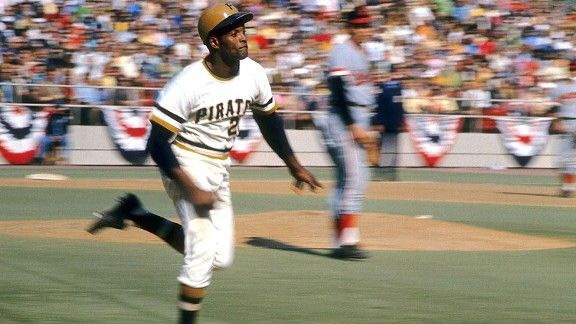
1) Roberto Clemente

Hit: Clemente had a career .317 average and 3,000 hits, including a league leading 211 hits (1964) and 209 (1967). He also won the batting title 4 times in 1961, 1964, 1965 and 1967. Power: A lifetime .475 slugger, his power was exhibited in different ways throughout his career. He hit double digit homers the last 13 years of his career; 29 in 1966 being the highest yearly total. He also hit an average of 29 doubles a year over 18 years. Run/Speed: He did not steal many bases, but it wasn’t because he couldn’t; he just didn’t really try that often. He was in the top 10 in triples 14 times, leading the league in 1969 (12). He is in the top 30 all-time with a total of 166. Field: 12 Straight Gold Glove Awards, #3 on the all-time errors list with 131 and a lifetime .973 fielding percentage. Nothing else needs to be said. Throw/Arm: If you hit a sharp single to right field, you better run it out or Clemente would come up firing. He is #2 in the history of the game with 255 career assists and #10 with 40 double plays as a right fielder.

It is undeniable that each of these Pirates were 5 Tool Players. However, there could be some debate as to the order they fall in or if another Pirates Legend could supplant one (or two) of the players on my list. That’s half the fun in writing articles such as these; the debates that always follow.

Identifying Talent in The Draft: The Job of a MLB GM


In one of my first articles on our new site I discussed the unique nature of the MLB June Amateur Draft. In a period of 12 years following the turn of this century there were 17,925 players selected in the MLB Draft. Of those almost 18,000 players, approximately 66% percent of them signed with a major league club. Of the 66% percent that signed approximately 11% of them ever made it to the majors. Not were successful in the majors or became everyday players; MADE it to Major League Baseball.

Each year 30 different MLB GM’s are tasked with the responsibility of identifying as many players that will fit into this 11% as possible. In previous years they had the ability to potentially take more risks and/or possibly miss on some picks as they would be drafting players over 40 rounds. Based on this draft model and the previously mentioned findings, on average 4 to 5 players selected should make it onto their respective big league squads. Now say the draft is constricted to Rob Manfred’s proposal of 5 to 10 rounds this season and 20 rounds next year; that would mean that on average 1 to 2 player(s) per team from each of the next two drafts would make it to Major League Baseball.

Rob Manfred relied on former Astros GM, Jeff Luhnow, for the “Houston Plan” to contract the MiLB and then had to suspend him for cheating.

Now Rob Manfred and a few genius GMs (Jeff Luhnow, David Stearns and Mike Elias) would have you believe that analytics have progressed to the point where players can safely be identified as being major league talents or minor league lifers without the use of the a formal system to help make these decisions and weed out the less talented players. This coming from the brain trust in Houston that has been accused of not properly calibrating their TrackMan data throughout the entire organization, especially in the minor league levels, which could result in faulty findings as it pertains to pitcher’s spin rates. This misinformation can easily be used to overrate a player in the trade market to the benefit of the team that is attempting to acquire more legitimate talent. Also if a team is going to these lengths to disguise the talent level of their pitchers, what could they be doing to make their hitters look better or worse? It’s a slippery slope once you start to go down that route.

I will agree that now, more than ever, there is an abundance of information from analytics, advanced scouting, expert assessments and amateur evaluations (including the ones I do myself) that can be utilized in the decision making process of choosing one player over another. However, does any of this actually improve the probability of making the correct decisions as to what players will successfully make it to the majors? I would ultimately have to say no. It is fun to look at and discuss the players that could productive major leaguers in the draft, but there are way too many other factors that go into a player reaching his full potential and/or projected future value. That is why it is always beneficial to play out actual games, at as many different levels as possible, to help make these determinations. A kid (and that’s what these players being drafted are, KIDS) could be a work out warrior, a big fish in a little pond or an injury waiting to happen because of overuse or just plain bad luck. No one knows for sure exactly what is going to happen with a player after they are drafted. So, it would be nice if some GM’s and the owners that they represent stopped pretending like they have some secret formula and admit that they are human just like the rest of us and that this actually all about one thing and one thing only…money.

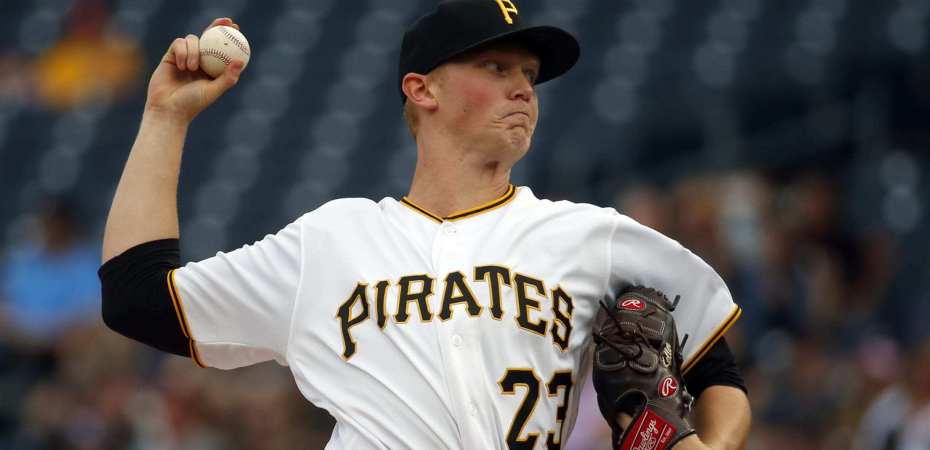
Mitch Keller – One Player with the Franchise Timeline on his Right Arm

I love baseball. Every part of it. I appreciate the game going on at any given time but much of what makes baseball the deepest sport in the country. Everything affects the timeline, player development, drafts, trades, injuries, management changes, and even assumptions can change where your franchise is in the projected progression.

Mitch Keller is one of those players who has an unhealthy amount of expectation and importance placed on his shoulders and his success or even stunted growth could create a delay that stops everything from lining up properly.

You can call it wishful thinking, most best-case scenario situations are, but let’s draw up what the hope was for Mitch moving forward. 2019 was a proving ground for Keller, and he didn’t prove much more than the fact he wouldn’t fall to pieces if he struggled. He put together a 1 and 5 record with a 7.13 ERA in 11 games. In 48 innings pitched he gave up 72 hits, walked 16 and allowed 6 bombs. He also did this in late September against the Mariners.

He showed steady improvement over those 11 games and struck out 65 in the process. This is less about what I think Mitch will become, and a whole lot more what his success or failure does to the timeline the club is working with for the rotation.

Projections are insane for a player like this, for one thing they’re based on a set of stats you’d never allow to progress. Let’s say 2020 started as normal, if the Pirates get to June or early July and Mitch is still putting up numbers that look like that, chances are he is sent back down, talent or no, to work on his craft. If he shows improvement, in other words, puts together a decent rookie campaign they probably let him fight through it, in the hopes it makes him more polished and ready to contribute in 2021 as a counted-on commodity.

Of course, we can’t go forward with the what if scenario of 2020 being normal. This is where reality starts to creep back in, the season will be short if it happens at all (I do believe some facsimile of a season will happen) and the preparation will at the very least be weird. The obstacles in his way for normal progression are stacked, but he will still be expected to take a step forward.

That’s the difference between need and want. Of course, everyone wants Mitch to become an anchor in the rotation, but the Pirates NEED him to reach his potential. He has something else in his favor, the Pirates recent mistake of giving up on Tyler Glasnow. The Bucs will hopefully have learned a bit of a lesson watching one of their top pitching prospects struggle to get his footing only to see him blossom for another squad.

We’ve written since last season that 2020 was not going to be a banner year for the Pirates, but that doesn’t make it unimportant. Every season is another year of progression, and the hope was that Mitch would show some, because heading into 2021 those wants and wishes will start to turn into need.

Jameson Taillon should be back, Chad Kuhl will have also completely rehabbed and should contribute. Keller fits right in here if everything goes right along with Joe Musgrove and I’ll not even play the game of who the fifth is. Point is, if the Pirates truly believe they are in a position to take what they have now and build on it to create a competitor, as Ben Cherrington has repeatedly told us, it can’t and won’t happen without Mitch Keller being a big part of it. His top end talent is higher than any one other pitcher in the system not named Quinn or Tanaj, and better still, he’s already here. There is no telling what a season like this will do to his progression, maybe we’ll see a longer period of hitters struggling to catch up to pitching. Maybe the Pitchers won’t get stretched out correctly and their will be more injuries or less innings. No matter how it plays out, Mitch Keller progressing has to happen, or Mr. Cherrington’s dream of building on this, is out the window.